
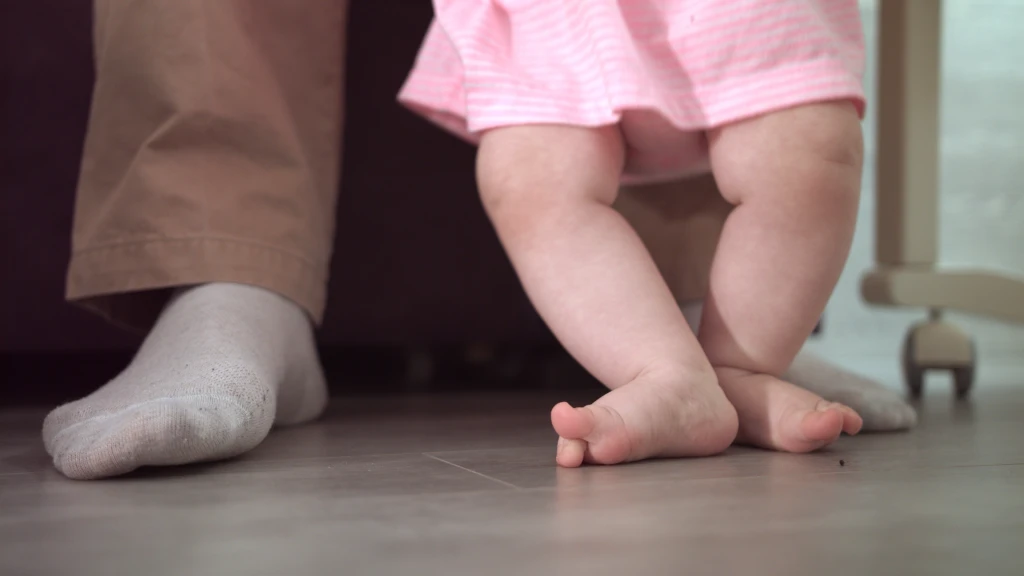
You have noticed it at the playground or walking home from school. Your child's feet point outwards as they walk, almost like a little duck, and you find yourself wondering whether this is just how they walk or whether something needs looking at.
Out-toe walking, sometimes called duck walking or out-toeing, is a gait pattern where one or both feet point outwards instead of straight ahead. It is less talked about than in-toe walking, but it is just as common in early childhood and usually has the same hopeful answer: in most children it is part of normal development and it settles with growth. In a smaller group, it points to something that deserves a closer look.
This piece walks through what is typical, what is not, and when it makes sense to book a paediatric podiatry assessment.
Normal Versus Concerning Out-toe Walking in Children
In the early walking years, most children's leg bones have not finished rotating into their adult position. Newborns are born with natural outward rotation at the hips, which is part of why so many toddlers look a little duck-footed at first. Over the next few years the hips, shins, and feet gradually rotate inwards, and the foot angle straightens.
Out-toeing tends to be typical when:
- Both feet turn out by a roughly similar amount.
- Your child is comfortable, not in pain, and keeping up with peers.
- They are meeting motor milestones (cruising, walking, running, climbing).
- The pattern is gradually improving, not worsening.
Out-toeing is worth a closer look when:
- Only one foot turns out, or one side turns out much more than the other.
- Your child trips often, complains of knee, hip, or leg pain, or avoids running.
- The pattern is getting more pronounced with age, not less.
- Your child seems to have lost a walking skill they previously had.
- You notice other gait differences alongside it, such as toe walking, a limp, or unusual posture.
The single most useful question to sit with at home: is this getting better, staying the same, or getting worse over the last six to twelve months. Steady or improving is reassuring. Worsening or asymmetric is the cue to book a review.
The Three Sources of Out-toeing: Hip, Shin, and Foot
Out-toe walking can come from three different levels of the lower limb, and the source matters because it changes what to do about it.
Hip (Femoral Retroversion or External Rotation)
The thigh bone can sit in the hip socket with extra outward rotation. When this is the source, the kneecaps and feet point outwards together, and the angle looks similar whether your child is standing, walking, or running. It is a recognised pattern, particularly in children who were breech-positioned in utero or who habitually sit in positions that pull the hips outward.
Shin (External Tibial Torsion)
The shin bone can twist outwards between the knee and the ankle. When this is the source, the kneecaps face forwards but the feet point outwards. This is the most common cause of out-toeing in school-age children, and mild external tibial torsion is part of normal growth. It becomes a concern when the angle is large, asymmetric, or persisting past the age it usually settles.
Foot (Flat Foot, Pes Planovalgus, or Forefoot Abduction)
The foot itself can sit in a position that points the toes outwards. A flexible flat foot with the heel collapsed inwards and the forefoot swung outwards can look very much like out-toeing, even when hip and shin alignment is fine. In this group, the gait pattern often improves once arch support stabilises the midfoot.
In real children these three sources often coexist. Sorting out which level contributes how much is the job of the assessment, since it changes whether the plan is reassurance, footwear and orthotic support, or onward referral.
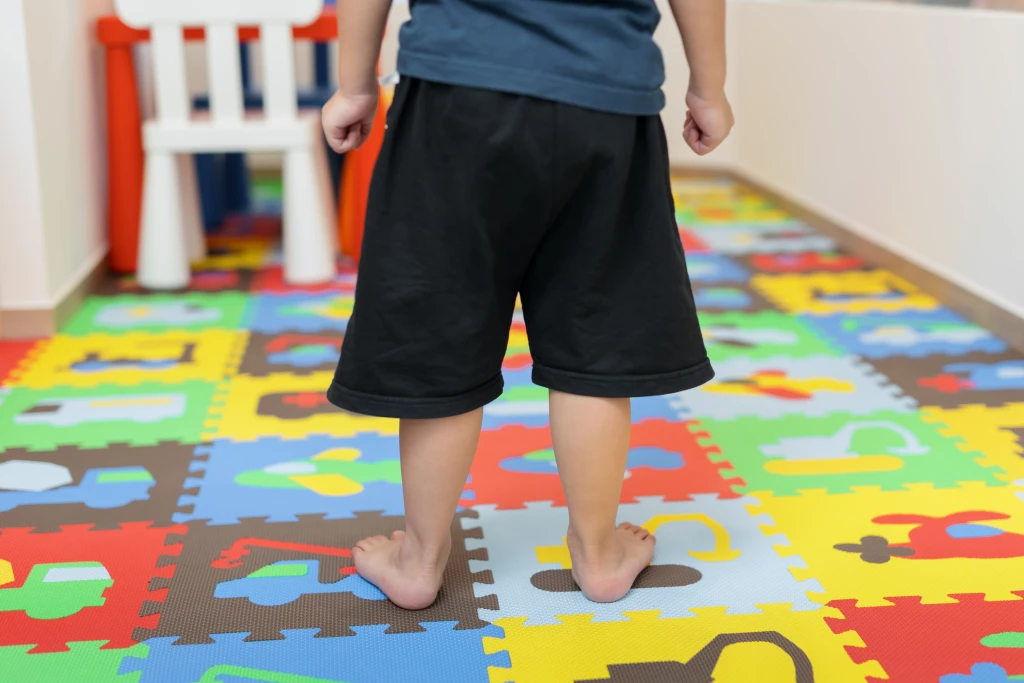
When Out-toeing Self-corrects With Growth
Out-toe walking in young children often improves on its own. The general pattern in typical development is that the hips and shins rotate inwards as a child grows, which gradually pulls the foot angle towards straight.
What is typical at different ages:
- Infancy to age 2. Newborns sit with the hips externally rotated and many toddlers look duck-footed in their first year of walking.
- Ages 3 to 5. Out-toeing often softens as the shin bones rotate outwards from their newborn inward twist, which combined with the inward rotation at the hip gradually straightens the foot angle.
- Ages 6 to 8. Most children settle into a foot angle close to their adult pattern. Mild residual out-toeing at this stage is often cosmetic rather than functional.
- Older school-age onwards. What is present by this age usually stays. Larger or symptomatic out-toeing past this point is worth assessing, since the window to influence growth is narrower.
These are typical ranges, not hard rules. Some children take longer, some settle earlier.
Red Flags: When Out-toeing Signals Something More
A small number of children with out-toe walking have something beyond normal rotational development going on. These are the patterns where a paediatric podiatry assessment, and sometimes onward medical review, is more important than waiting.
Book a review sooner rather than later if you notice:
- Asymmetry. One foot turns out much more than the other, or one leg looks shorter, thinner, or weaker. Asymmetric gait differences in young children can signal a hip issue such as developmental dysplasia of the hip, a leg-length difference, or in older children, conditions affecting the hip joint itself.
- Loss of a walking skill. A child who was walking well and has since become more unsteady, started toe walking, started limping, or stopped wanting to run. Regression of motor skills warrants medical assessment.
- Pain. Knee pain, hip pain, groin pain, or a limp alongside the out-toeing. Children should not have persistent pain with everyday walking.
- Neuromuscular signs. Stiffness, weakness, exaggerated reflexes, very tight calves, or developmental delay alongside the gait pattern. These can point to neuromuscular conditions that need paediatric medical input.
- Family history. A family history of hip dysplasia, neuromuscular conditions, or significant rotational problems lowers the threshold for assessment.
- A sudden change. Out-toeing that has appeared or worsened noticeably over weeks to months rather than slowly over years.
None of these are reasons to panic. They are reasons to bring forward an assessment you might otherwise have left for another six months.
What an Assessment for Out-toe Walking Looks Like
A paediatric out-toe walking assessment is a calm, child-friendly session of observation and gentle physical examination, with your child in shorts so the knees and lower limbs are visible. A typical assessment includes:
- History. Pregnancy and birth history, motor milestones, family history, sport and PE involvement, school and home footwear, and what you have noticed at home.
- Gait observation. Watching your child walk barefoot, walk in shoes, and where age-appropriate, run. Foot angle, kneecap position, and left-right symmetry are all noted.
- Standing posture. Arches, heel position, and how the knees and hips line up over the feet.
- Lower limb rotation tests. Gentle measurements of hip rotation, shin angle, and foot alignment. These tests sort out whether the out-toeing is coming mostly from the hip, the shin, or the foot.
- Footwear review. School shoes, sports shoes, and home footwear for fit and wear patterns. Singapore parents often bring along the slip-ons their child wears at home, since these tell us as much as the school shoes.
- Onward referral when needed. If the assessment raises a flag for hip, leg-length, or neuromuscular causes, your podiatrist explains why and helps coordinate the next step with your paediatrician or paediatric orthopaedic team.
Depending on findings, the plan may be reassurance with a review in six to twelve months, sitting-habit and play guidance, supportive footwear advice, custom orthotics where the foot is contributing, or onward referral. Most families leave with a clearer sense of where their child sits on the typical-to-concerning spectrum, which is often the part that has been weighing on them the most.
Paediatric foot and gait conditions are seen by our podiatrists at all three Straits Podiatry clinics in Buona Vista, Orchard, and Paya Lebar.
If after reading this you suspect your child actually walks with their feet turned IN rather than out, in-toe walking is the better starting point. When you would like an assessment, book an appointment at the clinic that suits you.