
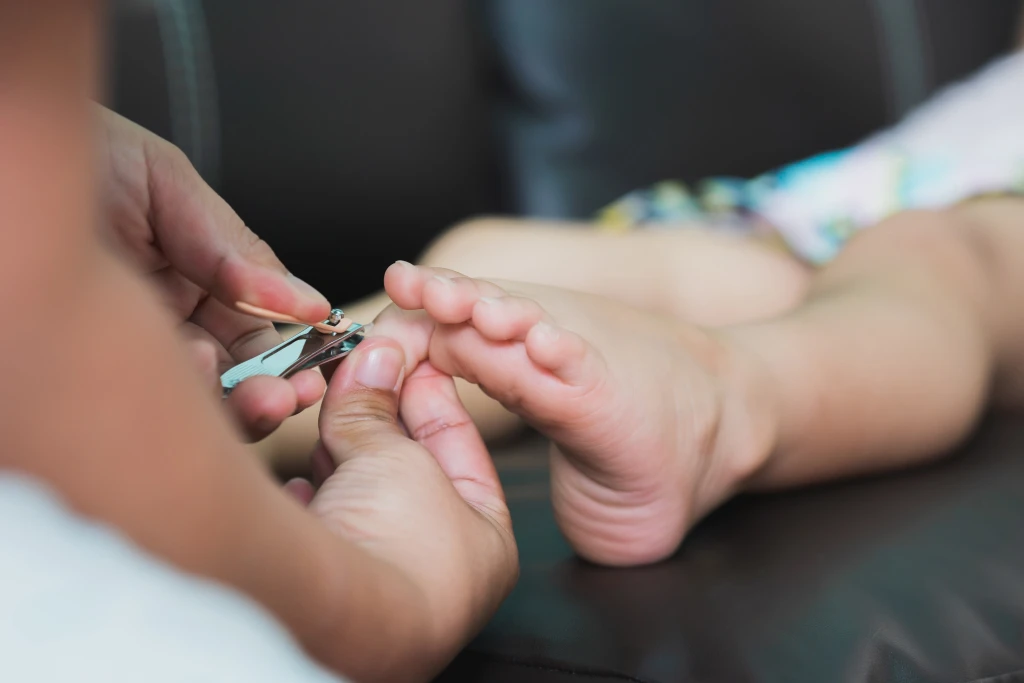
A child's ingrown toenail is not just a smaller version of an adult's. Nail anatomy is still maturing, anaesthetic protocols differ, parental anxiety changes the consult, and the threshold for surgical intervention is calibrated differently. This article covers the paediatric-specific considerations a podiatrist weighs when a parent brings a child in with a recurrent or infected ingrown toenail.
For the wider picture of what an ingrown toenail is in general, the pillar page covers the ground. This piece focuses on what changes when the patient is a child.
What's Different About a Child's Nail
The nail plate, the nail bed, and the surrounding soft tissues are all still developing through childhood. Several features of paediatric nail anatomy directly affect how an ingrown toenail behaves and how it is treated:
- The nail plate is thinner and more flexible. A child's nail bends and folds more readily under shoe pressure, which means the lateral edges can curl into the surrounding skin even without obvious mis-trimming.
- The surrounding skin (the nail fold) is softer and more pliable. This means it gives way under pressure more easily, but it also bounces back more reliably once the offending nail edge is removed. Conservative care in children works more often than the same approach in adults.
- The toe pulp is plump. The fleshy tissue under and around the nail in young children naturally rolls up against the nail edge, which can make a perfectly normal nail appear to be ingrowing when it is not.
- The growth plate is open and active. Any surgical intervention has to respect the underlying growing structures. This is one of the reasons the surgical threshold is calibrated higher in children.
- Recurrence patterns differ. A child with one ingrown toenail episode often grows out of it once nail-trimming habits and shoe fit are corrected. Adult recurrence patterns tend to be more entrenched.
These are not trivial differences. They are the reason a podiatrist will often hold off on the procedure that would be reasonable in an adult and try the conservative pathway first.
How Anaesthetic Protocols Differ for Children
If a procedure is needed, the anaesthetic step is the part of the consult that most parents (and most children) are anxious about. The protocol differs from the adult version in several ways:
- Topical anaesthetic cream is used routinely. A numbing cream is applied to the toe and around the nail fold under an occlusive dressing, left on for the time needed to take effect, before any injection is considered. This significantly reduces the sting of the local anaesthetic injection that follows.
- The local anaesthetic injection technique is adapted for a smaller toe. Lower volumes, finer needles, and a slower injection rate are standard. The aim is for the child to feel pressure, not a sharp scratch.
- Distraction and parental presence are part of the protocol. The parent stays in the room. Headphones, a tablet, or a chosen toy are part of the consult set-up. A calm child gets a better procedure.
- No adrenaline in the local anaesthetic at the digit. This is true in adults as well, but it is worth restating: digital blocks at the toe do not use adrenaline.
- The child's weight is checked against the maximum safe local anaesthetic dose. This is a routine adult check too, but the margins are smaller in a younger child and it is taken seriously.
What is not part of the protocol in a routine clinic setting is general anaesthesia. If a child is genuinely unable to tolerate an in-clinic procedure, the right answer is to defer and either retry with a different approach or, in the rare case where it is genuinely needed, refer for a procedure under appropriate sedation in a hospital setting.
Parental Anxiety and Why It Matters in the Consult
A child's experience of a procedure is closely linked to how anxious the adults in the room are. This is not a soft observation, it changes outcomes. Children read parental cues continuously and respond to them.
Practical things that help:
- An unhurried explanation of what the consult will involve, given to the parent first and then to the child in age-appropriate language.
- Honesty about what will hurt and what will not. A child who is promised "it will not hurt at all" and then feels a pinch loses trust for the rest of the consult and for the next visit. A child who is told the cream goes on first, then there is a small sting, then the toe goes numb, generally copes better.
- The parent staying physically present, sitting near the child rather than standing back.
- A first visit that does not involve a procedure where possible. An initial assessment visit, followed by a planned procedure visit if needed, lets the child get used to the room and the clinician first.
These are not extras. They are part of how a paediatric podiatry consult is actually structured.
When Conservative Care Is the Right Call
Conservative care is the default for most paediatric ingrown toenails, and it is more likely to work than the same approach in adults. The conservative pathway typically includes:
- Warm saline foot soaks twice daily for several days to soften the surrounding tissue.
- Lifting the nail edge with a small piece of cotton wisp or a soft barrier under the corner, where the nail edge has not yet broken the skin.
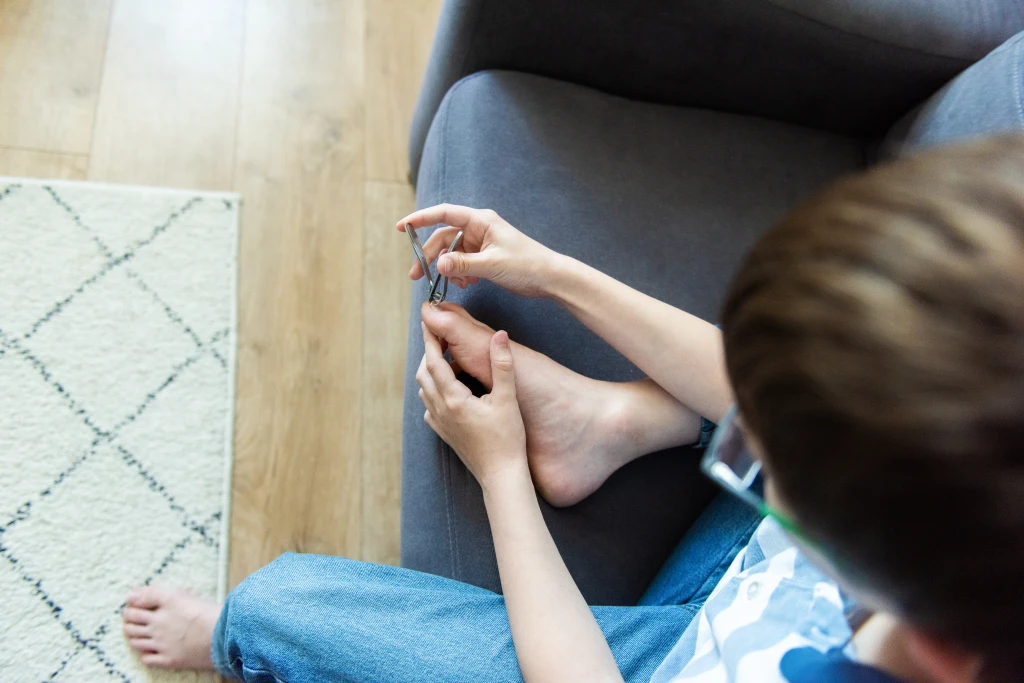
- Adjusting nail-trimming technique. Cutting the nail straight across rather than rounding the corners, and trimming flush with the toe rather than cutting it back too far.
- Reviewing footwear. Shoes that are too short, too narrow, or have an inflexible toe box concentrate pressure at the nail edge. Children grow out of shoes faster than parents tend to assume.
- Treating any superimposed infection with appropriate care, including referral for oral antibiotics where indicated.
A clear conservative trial over two to three weeks resolves a large proportion of paediatric ingrown toenail cases without any surgical intervention.
When Partial Nail Avulsion Is Considered
The threshold for a partial nail avulsion in a child is higher than in an adult, but it is not infinite. The procedure is considered when:
- The ingrown toenail is recurrent, with multiple episodes despite good conservative care and corrected nail-trimming technique.
- There is a chronic paronychia that has not settled with conservative measures.
- The child is in significant pain that is limiting normal activity, walking, school sport, or sleep.
- The nail shape itself is the structural problem, with marked curvature that is unlikely to correct with conservative care.
When the threshold is met, partial nail avulsion in a child is a well-tolerated in-clinic procedure with the anaesthetic protocol described above. The procedure removes a narrow strip of the offending nail edge, with chemical ablation of the nail matrix at that edge to reduce recurrence risk. The rest of the nail plate is preserved.
Aftercare for Children
The post-procedure period in a child has its own considerations:
- Dressings need to stay clean and dry, which is harder with a child than with an adult. Plan for a few days of shower management with the foot protected.
- Footwear should be soft and roomy for the first one to two weeks. Open sandals are reasonable, school shoes may need to wait or be temporarily replaced.
- Sport and PE are paused for the period the podiatrist specifies, typically one to two weeks depending on the procedure.
- Pain relief is usually modest. A child who needs more than simple paracetamol on the second or third post-procedure day should be reviewed.
- Review visits matter. Children may not articulate when something is not healing well. A scheduled follow-up catches problems that the child would not necessarily report on their own.
- Nail-trimming technique going forward should be revisited with the parent. The aftercare conversation is also a prevention conversation.
Closing
A paediatric ingrown toenail is its own clinical picture. The nail anatomy is still maturing, the anaesthetic protocols are adapted to a child, the parental dynamic changes how the consult should run, and the threshold for surgical intervention sits higher than in adults. Most cases settle with conservative care. The ones that do not respond well to a well-tolerated, paediatric-appropriate partial nail avulsion when the indications are met.
If your child has had recurrent ingrown toenails or is in pain now, book a consultation and a Straits Podiatry assessment can map out the right pathway.