
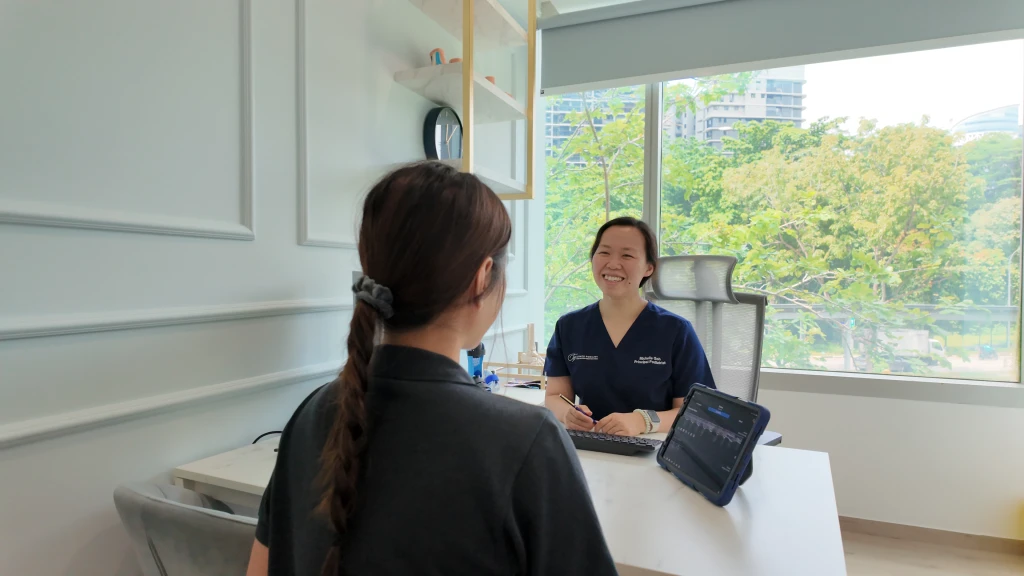
A typical podiatry consultation runs through a predictable sequence: structured history, hands-on examination, gait assessment where relevant, imaging recommendations if needed, and a plan you walk out with. This article walks through what each phase actually looks like in the consult room at Straits Podiatry, so first-time patients know what they are agreeing to before they book.
If you have ever sat in a healthcare appointment wondering "what's about to happen next", this is for you.
Phase 1: The Structured History
The first stretch of the consultation is conversation. Not casual conversation. Structured questioning that walks the symptom backward through time.
The podiatrist is building a clinical picture by asking about:
- When the pain started, and what was happening in the days or weeks before it appeared.
- Where the pain is at its worst, and whether it has moved or stayed in one spot.
- What makes it better (rest, ice, certain shoes, time of day) and what makes it worse (first steps in the morning, end of the day, specific surfaces, certain activities).
- Your activity load: how much you walk in a typical week, what sports or training you do, what your job demands of your feet.
- Footwear: what you wear day-to-day, what you wear for sport, how old those shoes are.
- Medical background: existing conditions, medications, previous injuries or surgeries, family patterns where relevant.
- What you have already tried, and what response you got.
The reason this phase takes time is that the history alone narrows the differential significantly before anyone has touched the foot. By the end of the structured history, the podiatrist usually has two or three working diagnoses in mind. The examination is what confirms which one fits.
Phase 2: Hands-On Examination
This is where the foot, ankle, and often the knee or hip come into the picture physically.
A typical examination sequence includes:
- Visual inspection of foot posture standing and sitting. The arch height, alignment of the heel under load, position of the toes, any visible swelling or skin changes.
- Palpation: the podiatrist presses on specific bony landmarks, ligaments, tendons, and soft-tissue structures to localise the painful tissue. This is where a vague "heel pain" becomes "tenderness at the medial calcaneal tubercle consistent with plantar fascia origin" rather than guesswork.
- Range-of-motion testing of the ankle, subtalar joint, midfoot, and big toe. Stiffness in any of these joints loads the rest of the foot differently and shows up here.
- Strength testing of the muscle groups around the foot and ankle, comparing left to right.
- Special clinical tests specific to the suspected diagnosis (for example, single-leg heel raise, windlass test, Thompson test, depending on what the history has flagged).
The examination usually reproduces the patient's symptom in a controlled way. That is intentional and confirms the working diagnosis, then the pressure is released and the pain settles immediately.
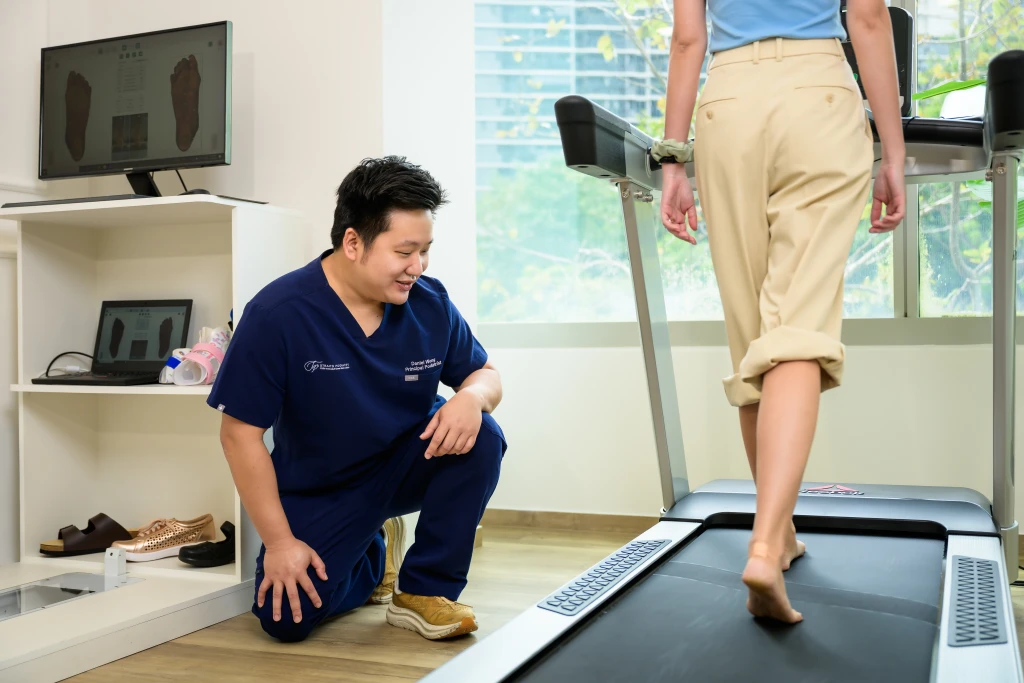
Phase 3: Gait Analysis (When Relevant)
Gait assessment is added when the clinical question involves how you move under load, not just what is sore when you sit still.
Conditions where gait analysis matters: running-related injuries, recurrent overuse injuries, flat feet and other postural concerns, recurrent ankle sprains, paediatric foot development questions, and patients being assessed for custom orthoses.
What gait analysis actually involves: walking back and forth in the consult area while the podiatrist observes. For runners or more detailed work, treadmill walking or running with video capture from behind and from the side. The podiatrist looks for asymmetries, timing of pronation, knee position relative to the foot, hip drop, and arm carriage as clues to whole-body loading patterns.
Conditions where gait analysis is not added: an acute ankle sprain that is too painful to load, a clear-cut nail issue, or a skin condition where movement is not part of the question.
Phase 4: Imaging Decision
Most first podiatry visits do not require imaging. The diagnosis is clear from the history and examination.
Imaging gets added when the clinical question genuinely needs it:
- X-ray when a bony injury (stress fracture, dislocation, significant arthritic change) is on the differential.
- MRI when soft-tissue pathology needs detail (tendon tear, deeper structural concerns).
- Diagnostic scans are used in clinic during the consultation where relevant to assist with assessment.
The principle is that imaging answers a specific question. "Let's scan it and see what shows up" is not the prompt. "Is there a stress reaction in this metatarsal that explains why pain is not settling" is.
If imaging is recommended, the podiatrist explains what they are looking for, where to get the scan, and what changes about the plan if the result comes back one way or the other.
Phase 5: The Plan You Walk Out With
The final phase is the part most patients underrate ahead of time and most appreciate afterward. The plan.
A useful plan has these elements:
- A clear name for the condition and a plain-English explanation of what is happening in the tissue.
- What is loading the area beyond what it can tolerate, in your specific context (your shoes, your walking routine, your training, your job).
- What changes in the next two to four weeks: activity modification, footwear change, exercise prescription, any supportive options.
- What changes in the medium term: progression criteria, what "better" looks like, what timeframe is realistic.
- What we do if the trajectory is not what we expected.
This phase is also where patient questions land best. By this point you have heard the diagnosis, understand the mechanism, and know what is being recommended. Pushing back, asking for alternatives, raising practical constraints (budget, work demands, upcoming travel, sporting commitments) all happens here, and the plan adjusts accordingly.
Closing
A first consultation is structured because the structure is what produces the right answer. Each phase has a specific job and the next phase builds on the last.
When you are ready to book a first consultation, pick a location and the team will guide you from there.