
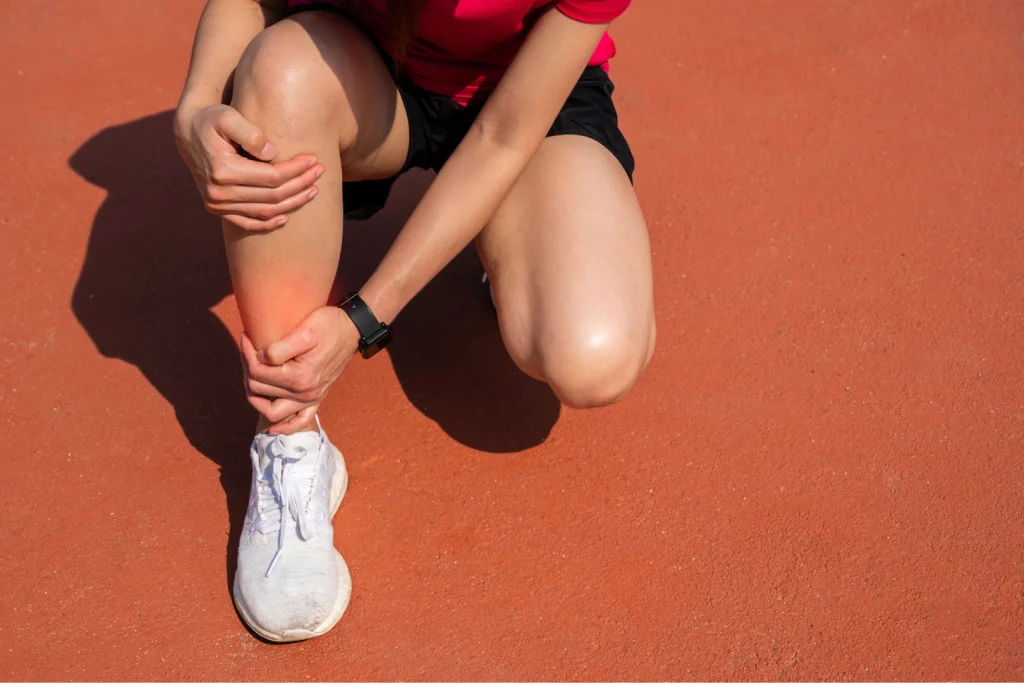
Most people who come to me with shin pain tell me a version of the same story. They either picked up running recently to get healthier, or they pushed their frequency, distance, or pace up a notch, and now a familiar ache turns up along the shin after every run. A good half of them are training for a marathon, or they are new National Service recruits who did not exercise much before. The build-up is different, but the pattern that follows is almost identical.
That pattern is the frustrating part. You feel fine for the first stretch of the run, then at a certain distance or intensity the shin switches on, the ache hangs around for the rest of the day, sometimes lingering a day or two more, and then it fades on its own. So you rest, feel better, head back out, and it returns at the same point. That on, off, and on again loop keeps going for a reason, and the reason is almost never that you simply need to toughen up. Here is why shin splints keep coming back, how I tell them apart from the problems that masquerade as them, and how to actually break the cycle.
First, is it really shin splints that keep returning?
The classic shin splints pattern is the one above: fine at the start, a predictable point where the ache kicks in, discomfort that trails through the rest of the day and settles with rest before the next run wakes it up again. If that is your story, recurring shin splints is the most likely answer. But two other things get mistaken for it, and they are worth ruling out because they change what you should do.
A tibial stress fracture is usually what happens when shin splints get ignored or someone trains straight through them. The pain stops respecting the “only during exercise” rule. It can hurt from the first step, bother your walking, come with a spot of localised swelling, or throb at night, and it becomes hard to do much of anything without it. Compartment syndrome behaves differently again. The simplest way I describe it is like the speed limiter in a car. Once you hit a certain pace or duration, the calf and leg start to burn, which is the limit telling you to back off, and it eases quickly once you stop. The giveaway is the type of pain. It burns, because blood flow is being squeezed, rather than aching or sharpening, and it does not trouble your walking, your sleep, or lower-impact activity.
Why they keep coming back
At its core, this is a story of stress against your capacity to tolerate it. When the load going through the lower legs outstrips what they can currently cope with, shin splints appear. That capacity is not one thing. It is a combination of how much you are doing, how you are training for it, the shoes you run in, your foot posture, and the strength and flexibility of the muscles around the shin and ankle. Pile on activity faster than the body can adapt, and the tissues get overloaded before they are ready.
Foot posture is often the quiet driver that keeps the cycle turning. When the foot overpronates, it drags extra strain through the posterior tibial tendon, which pulls on the inner border of the shin bone and irritates the lining of the bone, and that is what sets the pain off. The opposite foot has its own problem. With high arches that pronate too little, the foot absorbs less of the landing, so more of that force travels straight up and bends the shin bone, which hurts in its own way. A pronated foot is a well-recognised risk factor for this condition, as is having had it before, which is exactly why it recurs. [1] [2]
This is also why shoes matter, as long as they match your foot. A stability shoe helps rein in an overpronating foot, while a cushioned shoe suits a high-arched one that needs help soaking up shock. And underpinning all of it, a calf that is both strong and supple does a lot of the quiet work, absorbing the landing on every step and letting you push off without straining either side of the ankle.
The mistakes that keep you stuck in the loop
The single biggest mistake I see is treating this as a mind-over-body test. Most people ignore the pattern and file it under getting stronger, as though pushing through is part of the deal. It is not.
From there, the usual detours follow. Some keep swapping running shoes, or take a running influencer’s word that they just need to rotate between pairs. Others throw themselves into strengthening work, which is useful, but miss the fact that their foot posture is the thing driving the problem, so the pain keeps returning anyway. And plenty get drawn in by products that sell hope rather than a fix, all while skipping the one thing that would actually sort it, which is a proper assessment and a plan built around what is really going on. The irony is that this is what eventually sidelines them from running, which is the very thing they were trying to protect.
How I find why it keeps happening to you
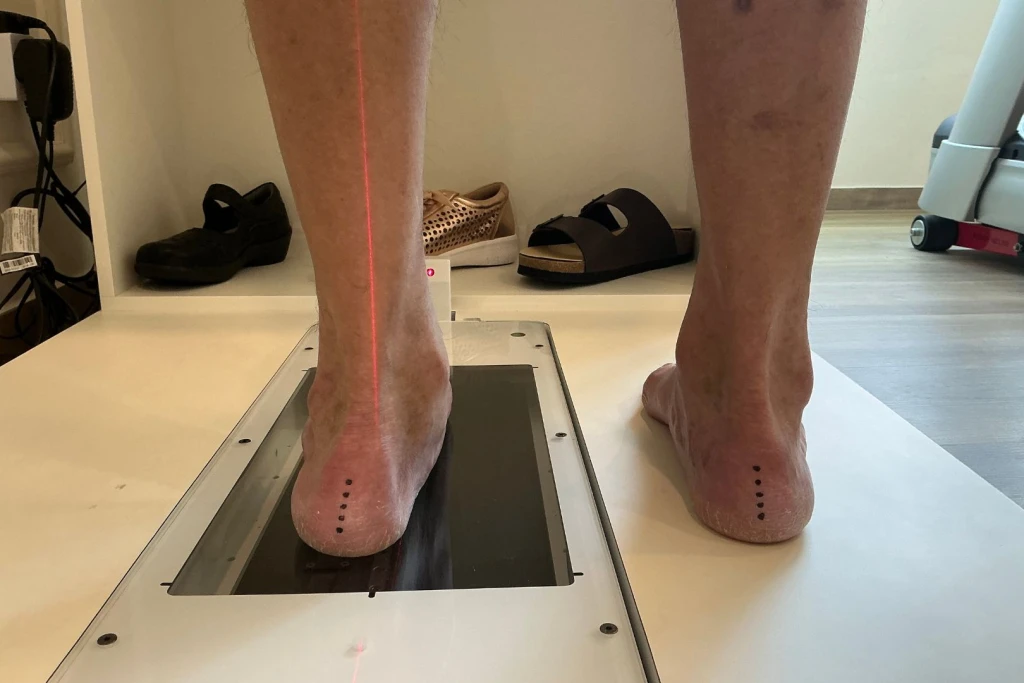
Breaking the loop starts with a full assessment, not a guess. I look at your standing posture, your running gait, how tight or weak the muscles around the shin and ankle are, and how stable and strong your hips are, because weakness higher up changes how the lower leg is loaded. Most important of all, I palpate the painful zone to confirm the diagnosis, because without the right diagnosis there is no right management. Where it helps to see the whole chain working under load, a gait analysis shows me what your leg actually does when you run, not just how it looks standing still.
If anything about the pain makes me think stress fracture rather than shin splints, I change course. A quick way to flush that out is a vibration test with a tuning fork over the bone, which will usually provoke the pain if there is a fracture underneath, and that tells me this needs a different, more protective path.
How to actually break the cycle
A plan that holds up is an all-round one, because the causes rarely travel alone. We work on the right strengthening for the calves, quads, hamstrings and glutes, so the whole leg shares the load better. Where the foot is driving it, we design customised foot orthoses to rein in the pronation or add the cushioning a high arch needs, and because a forefoot striker and a rearfoot striker load the foot differently, the orthoses are built differently too, so that gets checked rather than assumed. We also look at your stride. If you are overreaching with each step, shortening the stride and lifting your cadence spreads the load and takes a surprising amount of stress off the shin. Our physiotherapist guides the strengthening and the progression as the leg can handle more.
Honestly, once the actual causes are targeted, returning to running can be as quick as about four weeks. Where several factors are stacked together, a graded return usually runs somewhere between six and twelve weeks. These are the timelines I see in clinic rather than promises, because how fast you come back depends on what was driving it and how long it was left.
The misconception that costs runners the most
Stop thinking of the pain as weakness leaving the body, and stop hoping it will simply sort itself out. There is a normal kind of muscle ache after a hard session, called delayed onset muscle soreness, but that only shows up when you have pushed harder than usual, and it sits in the muscle. When the pain is not even in the muscle, and it keeps returning at the same point of the same run, that is not normal conditioning. It is a signal, and it deserves a proper look from a podiatrist before it decides your running for you.
Have your shins assessed before the next run cycle
If your shins flare every time you build your running back up, the useful move is to find out what keeps feeding it rather than rest, return, and repeat. Book a consultation with any of our podiatrists in Singapore for an assessment of your shins, your foot posture and your running gait, and a plan built to break the cycle rather than pause it.
Frequently Asked Questions About Recurring Shin Splints
Why do my shin splints come back every time I return to running?
Because rest settles the symptom without changing the cause. The pain eases while you are off your feet, but the thing that overloaded the shin in the first place, usually a mismatch between your training load and your capacity, plus a foot posture or stride that keeps feeding it, is still there when you lace up again. Until the driver is addressed, the same run tends to bring the same ache back.
How do I know if it is shin splints or a stress fracture?
Shin splints typically switch on at a predictable point in a run and settle with rest, with the soreness spread along the inner shin. A stress fracture tends to ignore that rule, hurting earlier, lingering into walking, sometimes with localised swelling or a throb at night, and it is usually more pinpoint. If the pain behaves like the second description, it is worth having assessed promptly, as a simple tuning-fork test over the bone often helps separate the two.
Will new running shoes stop my shin splints coming back?
Shoes matter, but only when they match your foot, a stability shoe for an overpronating foot or a cushioned one for a high arch. Where they fall short is as a standalone fix. If the real driver is a pronating foot, a too-long stride, or a weak and tight calf, a new pair alone will not hold the problem off, which is why rotating through shoes so often disappoints. An assessment tells you what your feet actually need.
How long before I can run again without the shin pain returning?
When a single clear cause is addressed, I often see people back to running in around four weeks. When several factors are involved, a graded return usually takes somewhere between six and twelve weeks, built up gradually rather than rushed. The honest answer is that it depends on what was driving it and how long it had been left, which is why an assessment first makes the timeline realistic.
References
- Neal BS, Griffiths IB, Dowling GJ, et al. Foot posture as a risk factor for lower limb overuse injury: a systematic review and meta-analysis. J Foot Ankle Res. 2014;7(1):55. doi:10.1186/s13047-014-0055-4.
- Newman P, Witchalls J, Waddington G, Adams R. Risk factors associated with medial tibial stress syndrome in runners: a systematic review and meta-analysis. Open Access J Sports Med. 2013;4:229-241. doi:10.2147/OAJSM.S39331.