Most patients who walk in saying "my big toe hurts" cannot point to exactly where the pain is. They press the joint, they press the side, they press underneath, and they wait for one of those to be the wrong answer. That moment of hunting tells me something. The big toe joint is one of the busiest small joints in the body, and four very different conditions can all present as "big toe pain when walking". This guide is a pattern-matching read. Each section gives you the characteristic signs, the typical trigger, and what makes the diagnosis distinct from the other three.
Why big toe pain has so many possible causes
The big toe joint, anatomically the first metatarsophalangeal joint, has more moving parts than people realise. Every step you take rolls your bodyweight through this joint as you push off the ground. Two small bones (the sesamoids) sit underneath it like ball bearings. A capsule and ligaments wrap around it. A long tendon runs along the bottom of it. The joint surface itself bends upwards roughly 65 degrees during walking, more during running.
Any one of those structures can be the source of pain, and they all sit within a few centimetres of each other. That is why patients who say "the whole big toe area hurts" are usually telling the truth. The pain genuinely is diffuse early on. It becomes specific only when you provoke one structure at a time, which is what an examination is designed to do. Until then, the most useful thing you can do is notice the pattern of when it hurts, where the pressure is, and what makes it worse.
For a fuller view of all toe pain causes (not just the big toe), the wider hub covers the 14 conditions we see most often, including the four below.
Bunion-pattern pain
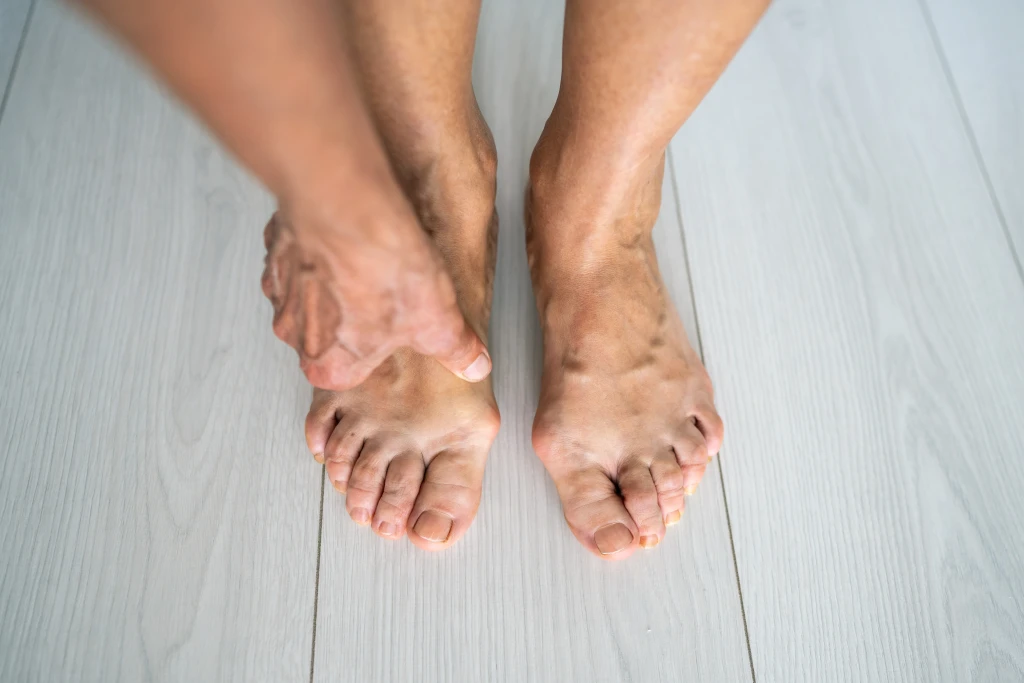
A bunion is a structural change, not a soft-tissue problem. The big toe drifts towards the second toe over time, and the joint at the base pushes outwards, forming the bony bump that most people recognise. The pain is usually about pressure, not the joint itself.
Characteristic signs:
- A visible bony prominence on the inside edge of the foot at the big toe joint.
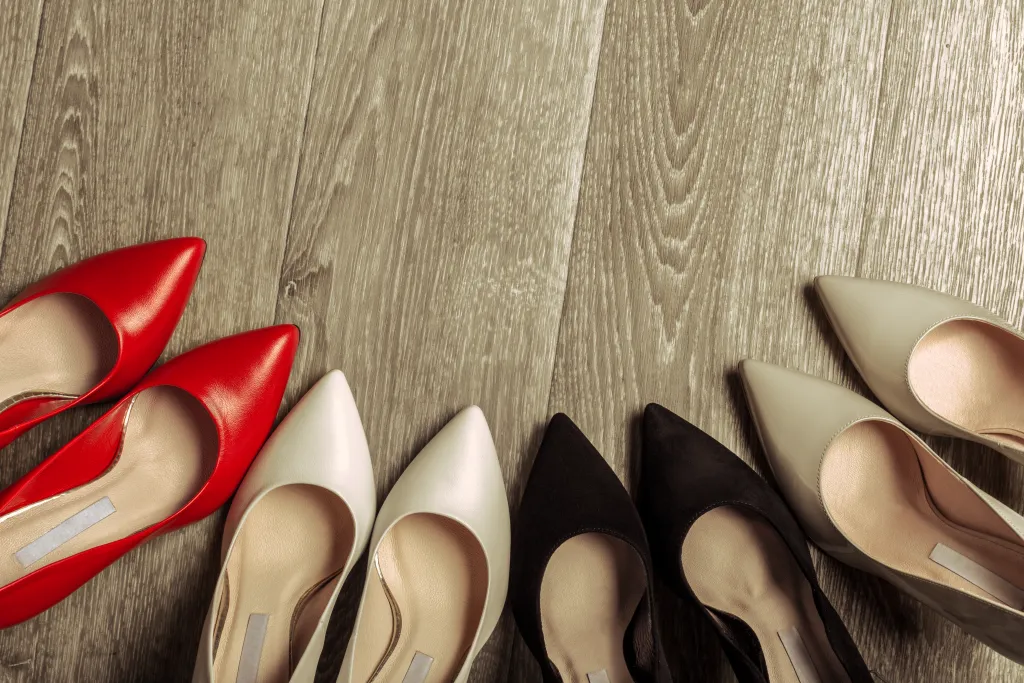
- Pain that flares with closed shoes, narrow shoes, or any footwear that presses sideways against the bump.
- Redness or a thickened patch of skin over the bump from chronic rubbing.
- The big toe angles noticeably towards the second toe, sometimes overlapping it.
Typical triggers. Office shoes, dress shoes, and any pointy or narrow footwear worn through a long day. Many patients describe relief the moment they kick off their shoes at home. Long walking sessions in tight shoes are the classic flare-up scenario.
What makes it distinct. A bunion gives you a visible deformity you can see and feel. The pain location is reliably on the side of the joint, not on top and not underneath. If you cannot see a bump, it is unlikely to be a bunion.
Hallux rigidus pattern
Hallux rigidus is osteoarthritis of the big toe joint. The cartilage at the top of the joint wears down, bony spurs form along the upper edge, and the joint loses its upward bend. It is one of the easiest big toe conditions to confuse with a bunion because both can show a bony prominence, but the prominence sits on top of the joint, not on the side.
Characteristic signs:
- Stiffness in the big toe, especially first thing in the morning or after sitting still.
- Pain on the TOP of the joint, not the side.
- Difficulty pushing off the floor when walking, often described as "I cannot get over my big toe".
- Squatting, going up stairs, or pushing into running shoes all reproduce the pain.
Typical triggers. Walking on hard floors, running, squatting in the gym, kneeling. Anything that forces the big toe to bend upwards past its current range. Patients often notice they have started shortening their stride or rolling onto the outside of the foot to avoid the bend.
What makes it distinct. The hallmark is lost upward bend (lost dorsiflexion). If you sit barefoot and try to lift your big toe upwards while keeping the rest of the foot flat, a hallux rigidus toe will not go as far as the other side, and the attempt itself will hurt at the top of the joint.
Sesamoiditis pattern
The sesamoids are two small bones under the big toe joint, embedded in the tendon that flexes the toe. They take a lot of load during push-off. Sesamoiditis is inflammation or stress reaction in those bones or the surrounding tissue. It is the classic "I think I bruised the ball of my foot" presentation that does not go away.
Characteristic signs:
- Tenderness directly UNDER the big toe joint, on the ball of the foot.
- Pain worsens with push-off activities (running, jumping, pivoting, dancing).
- Often dull and aching at rest, sharp on direct pressure.
- Walking barefoot on hard floors reproduces the pain reliably.
Typical triggers. A new running programme, a new dance class, sprinting, jumping rope, or a job that involves long hours standing on hard floors. Footwear with a thin sole or aggressive forefoot rocker can also be the unlock. We see it commonly in dancers and runners.
What makes it distinct. The pain is underneath the joint, not on top and not on the side. If you press directly into the ball of the foot just behind the big toe joint, that is where it hurts. Bunion and hallux rigidus pain do not localise there.
Turf-toe pattern
Turf toe is a sprain of the big toe joint, usually from a single forced bend incident rather than a slow build-up. The name comes from American football on artificial turf, but in our clinic it presents most often in football players, futsal, basketball, and people who have kicked something solid by accident at home.
Characteristic signs:
- The patient remembers the specific moment it happened, usually a forced upward bend of the big toe.
- Sudden swelling and bruising at the big toe joint within hours.
- Pain when bending the toe in either direction, but especially upwards.
- Stiff, painful push-off when trying to walk normally.
Typical triggers. Pushing off hard on a planted foot during sport, jamming the toe against a defender's foot, stubbing the toe into a wall or piece of furniture, or sliding the toe forward inside a shoe during a sudden stop.
What makes it distinct. A bunion, hallux rigidus, and sesamoiditis all build up gradually. Turf toe has an incident. If you can pinpoint the exact moment your big toe started hurting and there was visible swelling shortly afterwards, that is the pattern.
Other big-toe causes to rule out
Two more causes are worth knowing because they are common enough to confuse the picture, and both look very different from the four above.
Gout. Sudden, severe big toe joint pain that wakes you up at night, often with marked redness, warmth, and swelling. The joint can look almost shiny. Walking is barely possible during a flare. Gout is a uric acid crystal problem, not a footwear or biomechanics problem, so it does not pattern-match to the four above at all. It is usually treated medically. If your pain started suddenly overnight with marked redness and warmth, gout deserves the first look.
Subungual haematoma. A blood blister underneath the nail, usually after a stubbed toe, a dropped object, or repeated jamming of the toe against the front of a shoe (long descents, downhill running, ill-fitting boots). The pain is throbbing, very localised to the nail itself, and you can usually see the dark discoloration through the nail plate. It is a different pain location from any of the joint conditions.
Where to go from here. Use this guide to narrow your suspicion. The four joint patterns (bunion, hallux rigidus, sesamoiditis, turf toe) all benefit from an in-person examination because the structures sit so close together that pressing in the wrong spot by a few millimetres changes the answer. At Straits Podiatry, an assessment with our podiatrists includes a structured examination of the joint, the sesamoids, the tendons around it, and your gait pattern, plus footwear and activity review. From there, we map the right treatment, whether that is footwear and orthotic adjustment, focused shockwave therapy for the chronic patterns, or a structured loading programme for the sport-related cases. If your big toe has been hurting for more than a few weeks, book an appointment at the Buona Vista, Orchard, or Paya Lebar clinic closest to you.