
Most people I see about a bunion come in before they have decided anything, and plenty have already seen a surgeon and simply want an honest second professional opinion before they take that step. The first question is almost always the same: “Do I actually need the surgery?” A lot of them walk in expecting me to talk them out of it, because podiatrists focus on conservative treatment. I do not, because bunion surgery genuinely has a place, especially for a painful bunion. What I do instead is help them see the whole picture first, because this is a decision you only want to make once.
So here is how I think it through with a patient: how to tell whether surgery is really the right step for you, what the recovery actually involves (it is longer than most people expect), the risks worth knowing before you commit, and the things that are worth trying first.
“Do I actually need bunion surgery?”
When someone asks me that, I work through three questions with them. First, what is bothering you the most, is it how the bunion looks, or is it pain that is affecting what you do day to day? Second, how much conservative care have you actually tried? Third, do you understand what to expect afterwards, and are your expectations realistic?
If the honest answer is mainly cosmetic, I have to be direct: bunion surgery is not designed as a cosmetic procedure, and it is not like plastic surgery. No one can guarantee your foot will end up looking the way you are picturing, and you have to be willing to accept that it could even look worse for a while, or longer, because of swelling or over-correction. If the driver is persistent pain that is limiting your activity, then the real question becomes how much you have tried short of surgery, because if you have not tried anything yet, it is usually too early to jump to an operation.
And either way, bunion surgery is a long recovery, often months and sometimes more than a year depending on your health and the procedure, so if your expectation is to be back in your nice shoes and doing everything you love within a few weeks, that needs a reset.
The honest truth I give everyone is this. Once you cut, something will definitely change. The intention is always to make you better, but a surgery also carries the risk of making things worse. That is not a reason to avoid it, it is the reason to go in with a clear picture rather than a hopeful one.
When surgery is genuinely worth considering
The two biggest factors that push a bunion toward surgery are the size and angle of the deformity and the pain that comes with it. If the bunion is advanced, causing severe pain not just at the bump but under the second toe, or it has started to overlap the neighbouring toes, then it makes sense to seriously think about surgery.
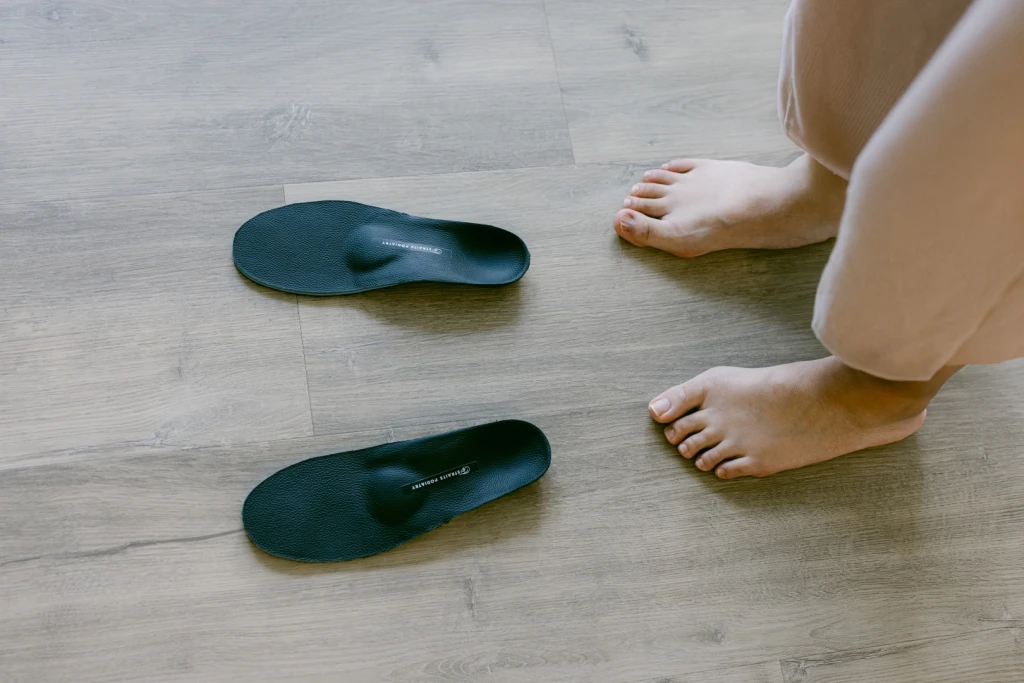
But even then, I want to see that you have genuinely tried the conservative measures first. That means OTC toe separators to ease the pressure where the big toe presses on its neighbour, along with exercises, footwear changes, and customised insoles to reduce the pain coming from the bunion itself. Working through those matters, because if none of them helps, you now have a clear picture that surgery is the reasonable next step rather than a first resort. When you have tried those things and you are still struggling to run or do the sport you love, that is the point where bunion surgery can genuinely help you get back to it.
What the surgery involves, and the recovery most people underestimate
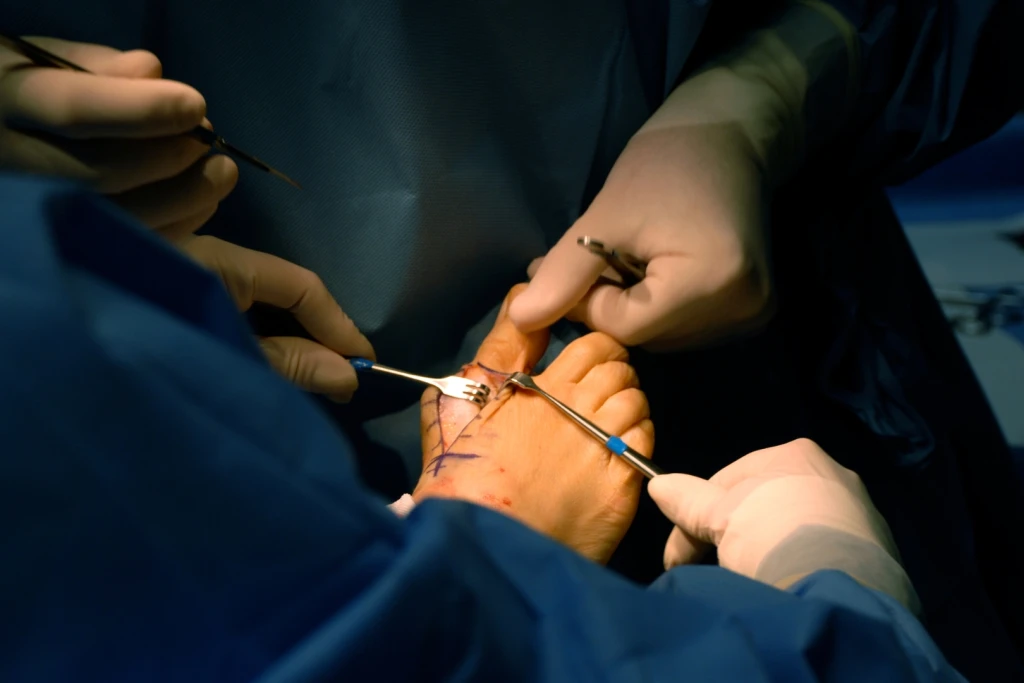
Bunion surgery is done in several different ways, and the orthopaedic surgeon is the better person to take you through the specifics for your foot. In broad terms, it involves cutting and shifting the position of the first metatarsal, sometimes the bone of the big toe itself, and sometimes pinning the bones, with the exact approach depending on how severe the bunion is and the health of the joint.
What I spend the most time resetting is the recovery timeline. The skin wound may heal in two to three weeks, but a realistic recovery is rarely less than three to six months. What takes the time is the swelling settling, getting the movement back in the big toe joint, rebuilding the muscle strength you lose during the rest period, and relearning to walk normally. If you play sport at a high level, expect longer, because returning to sport asks far more of the foot than simply getting back into normal shoes.
When I look after patients after their surgery, the first six weeks are usually in a boot or a post-op shoe, where we get you walking with partial weight through the area while encouraging the big toe joint to move, to bring the range of motion back and help the swelling down. That involves passive range-of-motion work, resistance-band training for the calf, and toe curls. This stage matters more than people realise. If you are not motivated to commit to the movement and the walking, swelling becomes your biggest enemy and the whole recovery drags out.
Once the swelling is down, we move you into a supportive sports shoe, usually roomy enough to take any remaining swelling and with a bit of toe spring to help you push off, and we start the weight-bearing strengthening, calf raises, single-leg balance, squats, and getting you back to a proper heel-to-toe walking pattern. By around the third month, progressive strengthening is what decides how quickly you return to sport. If everything goes smoothly and you put the work in, you get back sooner, and structured physiotherapy through this phase makes a real difference to how smoothly it goes.
The risks worth knowing before you decide
The risk most patients have never considered is recurrence, and it is more common than people expect. One systematic review that pooled nearly three thousand operated feet found the bunion came back in roughly one in four cases, and it was more likely when the deformity was more severe to begin with and when the alignment was not fully corrected at surgery. [1] In my own experience, it also tends to return when the underlying cause of the first bunion is never addressed. If your bunion grew out of hypermobile joints and flat feet, and those are left unchanged after the operation, the deformity has a real chance of developing again over time, and I see it most in people who had the surgery mainly for appearance.
A few others are worth knowing. The big toe joint can end up stiff, or stay stiff, if the joint was not in great shape to begin with or if swelling lingers, and that affects how the toe works and whether you can walk without pain. Some numbness over the incision is a genuine possibility and not something you can do much about. An over-sensitive scar that tingles or burns can settle with regular massage and desensitisation. There is also over-correction or under-correction, where the toe is left deviated one way or the other and creates its own secondary problems. And occasionally the big toe ends up a little shorter after surgery, which can shift load onto the second metatarsal head and bring on a callus, metatarsalgia (pain in the ball of the foot), or even a stress fracture there. These are not scare stories, they are real outcomes I have seen, and knowing them is simply part of deciding well.
What to try before surgery
Before surgery is ever on the table, a few things genuinely help. Start with footwear: wide and supportive, never pointed-toe shoes that crowd the toes, and not floppy ballet flats that do nothing to stabilise the foot as you walk. Add regular foot exercises for the intrinsic muscles, particularly the toe flexors and the abductor hallucis, which help support the joint. And where a biomechanical driver is feeding the bunion, such as overpronation, a hypermobile foot, or a plantarflexed first ray, a custom insole designed around that specific factor can slow the deterioration and ease the pain during activity. Done well, that combination can sometimes hold surgery off altogether. This is also the same work that protects you from recurrence if you do eventually have the operation, and it is why we bother with toe separators and the other conservative measures before reaching for a scalpel.
The misconception that worries me most
The one I correct most often is the belief that bunion surgery is just shaving off a bump, that you will be back to sport in a couple of weeks, that the toe will look beautiful, and that you will be straight back into your favourite shoes. It is a lovely picture, and it leaves out every one of the risks. Bunion surgery is a genuinely good option for the right person. The point is simply to weigh the benefits and the risks honestly, in your own favour, before you decide.
Get an honest read before you decide
If you are weighing up bunion surgery, it is worth getting an honest assessment of how advanced the bunion is, what is driving it, and whether you have real room left in conservative care first. Book a consultation with any of our podiatrists in Singapore for that read, and if surgery is the right step, we will tell you so and refer you to a foot and ankle surgeon with a clear picture of what to expect.
Frequently Asked Questions About Bunion Surgery
Do I really need surgery for my bunion?
Most people do not. Surgery is for a painful bunion that is limiting your daily life despite genuinely trying conservative care, not for the look of the bump. It comes down to how much the pain affects what you do, how advanced the deformity is, and what you have already tried. If you have not worked through footwear changes, exercises, toe separators, and customised insoles yet, it is usually too early to be considering an operation.
How long does recovery from bunion surgery actually take?
Longer than most people expect. The skin wound heals in two to three weeks, but a realistic recovery is rarely under three to six months, and longer if you play high-level sport. The time goes into settling the swelling, restoring movement in the big toe joint, rebuilding strength, and relearning to walk normally. The first six weeks are usually in a boot or post-op shoe, and how committed you are to the movement and rehab has a real effect on how smoothly it goes.
Can a bunion come back after surgery?
Yes. If the underlying cause of the original bunion, such as hypermobile joints or flat feet, is not addressed, the deformity can gradually return. This is why the biomechanics matter even when surgery is done, and it is most common in people who had the operation mainly for appearance. Supportive footwear, foot strengthening, and insoles that target the driver all help protect the result.
Is bunion surgery worth it just to fix how my foot looks?
Bunion surgery is not a cosmetic procedure, and it should not be treated like one. No one can guarantee the foot will look the way you are imagining afterwards, and swelling or over-correction can leave it looking worse for a time. If appearance is the only reason you are considering it, that is worth thinking through very carefully, because you would be taking on a real recovery and real risks for an outcome no one can promise.
References
- Ezzatvar Y, López-Bueno L, Fuentes-Aparicio L, Dueñas L. Prevalence and Predisposing Factors for Recurrence after Hallux Valgus Surgery: A Systematic Review and Meta-Analysis. J Clin Med. 2021;10(24):5753. doi:10.3390/jcm10245753.