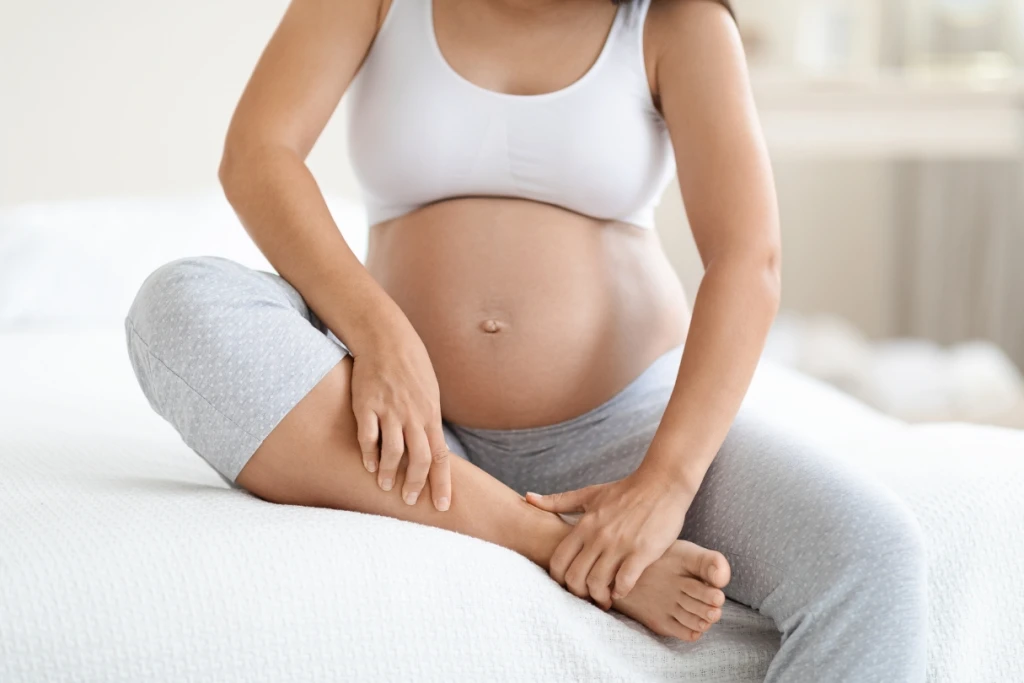
Foot pain during pregnancy is something most mums-to-be put down to the extra weight, and that is only half the story. The weight matters. But what makes it hurt is that weight landing on ligaments that are softer and stretchier than ever, on a foot that is quietly changing shape underneath you.
The pregnant women I see usually come in for one of two reasons. The first is foot pain, most often in the arch or the heel. The second is something more routine, like an ingrown toenail. Here is what is going on with your feet during pregnancy, which changes are normal, which ones need a doctor, and what you can safely do about the pain.
Why foot pain during pregnancy usually starts in the second trimester
The first trimester tends to be quiet for the feet. The trouble usually builds through the second and third trimesters, because that is when the weight gain picks up and the body starts holding on to a lot more fluid.
So if your feet felt fine for the first few months and are now aching by the end of every day, that timing is very typical. It does not mean something has gone wrong. It means the load on your feet has finally outgrown what they were used to carrying.
What pregnancy actually does to your feet
During pregnancy your body produces a hormone called relaxin, which makes your ligaments looser and more stretchy. That is useful for the pelvis, which needs to make room for the baby, but the hormone does not only act there. The ligaments that hold up the arch of your foot loosen too.
Now put more body weight on top of feet whose ligaments are getting looser. That is a very bad combination. The structures that normally hold the foot’s shape are weaker and more heavily loaded at the same time. Many pregnant women notice that their arch sits a little lower and their feet look a little wider. Some find their feet get bigger, sometimes by a full size or two.
This is not just something patients report. One study measured women’s feet in early pregnancy and again around five months after birth. Arch height dropped, foot length increased, and the first pregnancy accounted for most of that change. [1]
When the arch lowers, the foot rolls inwards more than it should, which is what we call excessive pronation. This is how pregnancy can bring on or worsen flat feet, and it is the reason behind most of the pain I see in pregnant patients.
Swollen feet in pregnancy: what is normal and what is not
Some swelling is normal, and it usually turns up in the third trimester rather than early on. The typical kind is what we call pitting oedema, which is fluid retention in the tissue. If you press a finger into the swollen area for a few seconds and let go, it leaves a small dimple that slowly fills back in. It tends to affect both feet and ankles, and it is usually worse by the end of the day.
There are two kinds of swelling I would never wait on.
- Swelling that is very severe and comes with redness and pain, especially if it is mainly in one leg. Treat this as an emergency and get seen the same day, because a blood clot in the leg needs to be ruled out.
- Swelling that appears suddenly, particularly if your face or hands swell too. Check this with your obstetrician promptly. Your GP can help, but your obstetrician is the better first call, because sudden swelling can be a sign of pre-eclampsia, a blood pressure problem in pregnancy that needs proper monitoring.
Neither of these is a podiatry problem, and I would rather send you to the right doctor than have you sit on it.
Arch pain, heel pain or cramps: which pregnancy foot pain is most common
Honestly speaking, arch pain and heel pain are far more common than cramps, at least in the patients we see. That comes straight back to the arch lowering. As the foot flattens and rolls in, the tendons and soft tissues inside it get overstretched and stressed, sometimes to the point of injury.
The two I see most are:
- Pain along the inside of the ankle and arch. This is often pain in the posterior tibial tendon, the tendon that helps hold your arch up. When the arch drops, this tendon works overtime and can become irritated and painful.
- Pain under the heel, especially with the first steps in the morning or after sitting. This is usually plantar fasciitis, where the thick band of tissue running along the sole from the heel to the toes is pulled tighter as the arch flattens.
Both are made worse by the extra weight, which is why the pain can feel like it is getting steadily worse as the weeks go on.
Cramps do happen, but mostly in women who were fairly inactive before they fell pregnant. Their calf and foot muscles simply were not conditioned for the extra demand of the weight gain, so they tire faster and cramp more easily.
What is safe and actually helps foot pain during pregnancy
The load is the one thing we cannot change much. The baby is growing, and the weight will keep going up until the end. What we can change is how that load lands on your feet, and that is where shoes and insoles come in.
Nothing invasive happens during pregnancy, and that means no surgery of any kind. Some treatments I would normally use for a stubborn heel need extra care too. During pregnancy, shockwave therapy is used with caution, and we avoid using it anywhere near the tummy or pelvis. So the focus stays on simple, safe measures that reduce the stress on the tissues.
- Supportive shoes, every time you are on your feet. You want a shoe with a firm heel counter and proper cushioning to absorb the impact of the extra load. Soft, flimsy flats and worn-out slippers give the foot nothing to work with.
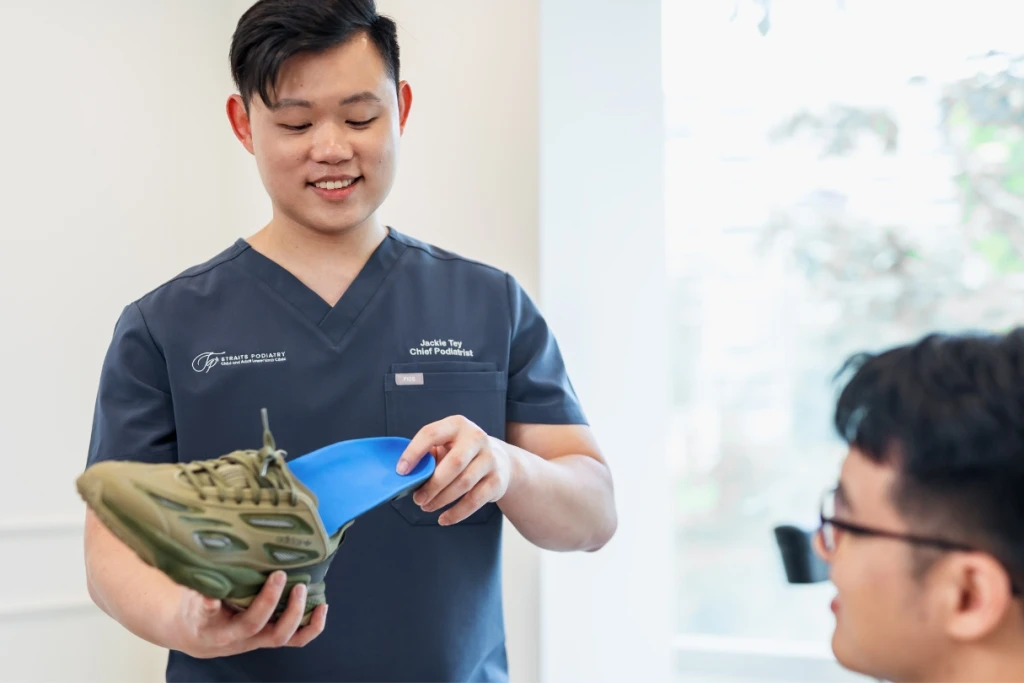
- Custom insoles to support the foot posture. Custom foot orthoses can help correct the way the foot is rolling in, so the tendons and plantar fascia are no longer being overstretched with every step. Once the tissue stress is under control, the symptoms usually settle.
If you already wear insoles from before your pregnancy, they may no longer fit the foot you have now. A changing foot size and shape is one of the clearest signs your insoles need replacing, and a pair made for your pre-pregnancy foot can end up pushing in the wrong places.
Will your feet go back to normal after pregnancy?
In theory, most feet should settle back to roughly where they were about a year after giving birth, once the hormones and the weight return to normal. For many women they do.
But not all. One of my patients, a mother of three, told me her shoe size went up by two and a half sizes across her pregnancies and never came back down. She is not unusual. The study I mentioned earlier found the drop in arch height was still there months after birth, and its authors described it as a lasting change. [1]
In my experience, we should expect this more often here. Loose, flexible joints (hypermobility) are generally more common in Asian populations. A foot that starts out more mobile has less to hold it up when relaxin and the extra weight arrive. That is my clinical judgement rather than a proven fact, but it matches what I see: a fair number of women in Singapore are left with feet that stay flatter or larger after birth.
That is why I do not tell patients to simply wait it out. If your feet are still hurting six months or a year after the baby, it is worth having your foot posture assessed, because the foot you are walking on may genuinely be a different shape from the one you had before.
What I would do if your feet hurt during pregnancy
If you are pregnant and your arches or heels ache more each week, the most likely story is a lowering arch under extra load, straining the tendons and the plantar fascia. Swelling that is mild, in both feet and worse by evening is usually part of the picture. Swelling that is sudden, severe, red or painful is not, and it goes to your obstetrician or the emergency department first.
For the foot pain itself, a podiatrist assessment looks at how far your arch has dropped, how much your foot rolls in when you walk, and which tissue is taking the strain. From there, the plan is deliberately simple and safe for pregnancy: the right supportive shoes, and custom insoles to bring the foot posture back under control. Leaving it alone often means the pain keeps climbing with the weight, and it can carry on well after the birth.
If your feet are hurting during or after your pregnancy, book a consultation with any of our podiatrists in Singapore.
Frequently Asked Questions About Foot Pain During Pregnancy
Is it normal for my feet to swell during pregnancy?
Yes, some swelling is normal, especially in the third trimester. It usually affects both feet and ankles, gets worse through the day and leaves a small dimple when you press it. Swelling that comes on suddenly, is very severe, or comes with redness and pain, particularly in one leg, is not normal and should be checked by your obstetrician or a doctor straight away.
Will my feet go back to their normal size after pregnancy?
For many women, yes, usually within about a year of giving birth. For some, no. Research has found that the drop in arch height can last well beyond the birth, and the first pregnancy seems to bring the biggest change. If your shoes still do not fit or your feet still hurt a year on, the change may be permanent and worth having assessed.
Can I get custom insoles while I am pregnant?
Yes. Custom insoles are one of the safest and most useful options during pregnancy, because they reduce the strain on the arch and heel without anything invasive. Because your feet can keep changing through the pregnancy and after the birth, the insoles may need to be reviewed or remade later.
Why does my heel hurt so much in the morning now that I am pregnant?
Heel pain with the first steps of the morning is the classic sign of plantar fasciitis. During pregnancy, the arch lowers under the combination of loosening ligaments and extra weight, which pulls the plantar fascia tighter. Supportive shoes and custom insoles that control the foot posture usually help it settle.
References
- Pregnancy leads to lasting changes in foot structure. Segal NA, Boyer ER, Teran-Yengle P, Glass NA, Hillstrom HJ, Yack HJ. American Journal of Physical Medicine & Rehabilitation, 2013.