

Understanding Heel Pain
Heel pain is a general term used to describe any discomfort in the heel area. It can range from a dull ache to a sharp, stabbing pain. While Achilles tendonitis and plantar fasciitis are common culprits, there are other possible causes, such as heel spurs or stress fractures.
Achilles Tendonitis
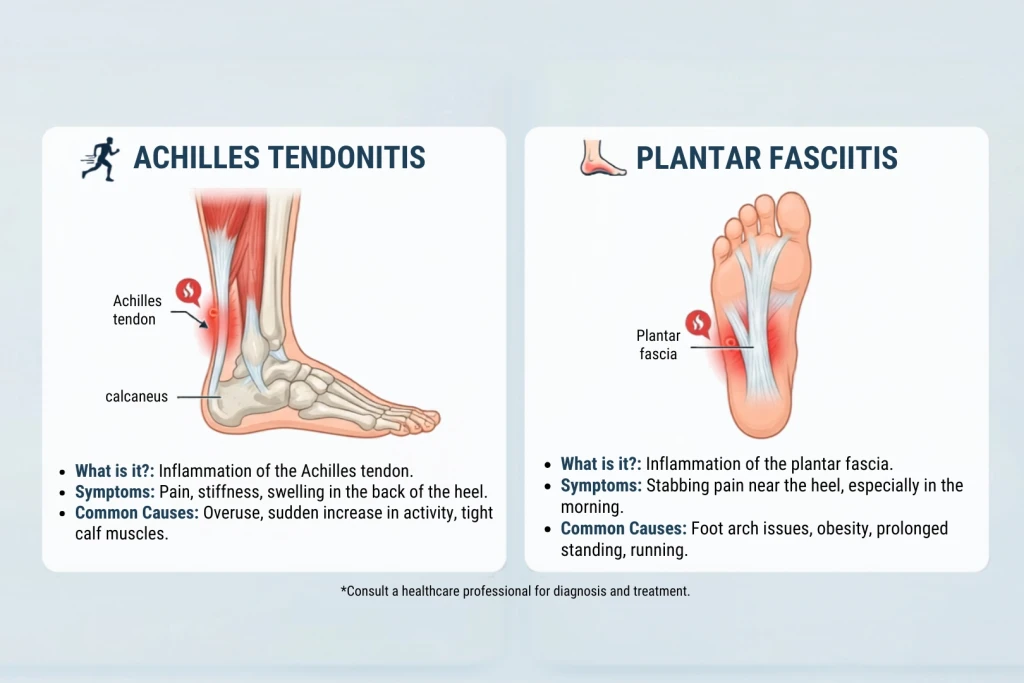
Achilles tendonitis is an inflammation of the Achilles tendon, the thick band of tissue that connects your calf muscle to your heel bone. It’s often caused by overuse, such as running or jumping.
Symptoms of Achilles tendonitis include:
- Pain in the back of the heel, especially when starting activity
- Stiffness in the morning
- Swelling around the Achilles tendon
Plantar Fasciitis
Plantar fasciitis is an inflammation of the plantar fascia, a thick band of tissue that runs along the bottom of your foot, connecting your heel to your toes. It’s often caused by overuse or repetitive strain.
Symptoms of plantar fasciitis include:
- Sharp pain in the heel, especially in the morning when you take your first steps
- Pain that eases as you move around
- Stiffness in the foot
Differences Between Achilles Tendonitis and Plantar Fasciitis
Telling the difference between Achilles tendonitis and plantar fasciitis can be tricky, as the pain is often in a similar area. However, there are some key differences:
Location of Pain
Achilles tendonitis is usually at the back of the heel, while plantar fasciitis is typically at the bottom.
When the Pain is Worst
Achilles tendonitis pain is often worse after strenuous activity, while plantar fasciitis pain is often worse in the morning.
When to See a Doctor for Heel Pain Treatment
While many cases of heel pain can be treated at home, it’s important to see a podiatrist or doctor if:
- Your pain is severe or doesn’t improve with home treatment
- You have swelling, redness, or warmth around your heel
- You have difficulty walking or putting weight on your heel
A podiatrist or doctor can diagnose the exact cause of your heel pain and recommend the most appropriate treatment.
Take the First Step to Heel Pain Relief with Straits Podiatry
Heel pain can significantly impact your daily life, but it doesn’t have to control you. Understanding the difference between Achilles tendonitis and plantar fasciitis is crucial for effective heel pain treatment. Remember, while home remedies can provide temporary relief, seeking professional advice is essential for a proper diagnosis and tailored treatment plan.
Straits Podiatry is here to help you overcome heel pain. Our podiatrists specialise in diagnosing and managing various heel conditions, including Achilles tendonitis and plantar fasciitis. We offer comprehensive heel pain treatment, from conservative measures to advanced therapies.
Don’t let heel pain hold you back any longer. Contact Straits Podiatry today to schedule a consultation.