
Massaging a sore heel feels like the obvious thing to do, and for a lot of people it does take the edge off. The catch is that massage can help or harm plantar fasciitis depending on how, where, and how hard it is done, and on its own it rarely settles the problem for good. Here is how I talk it through with patients in clinic.
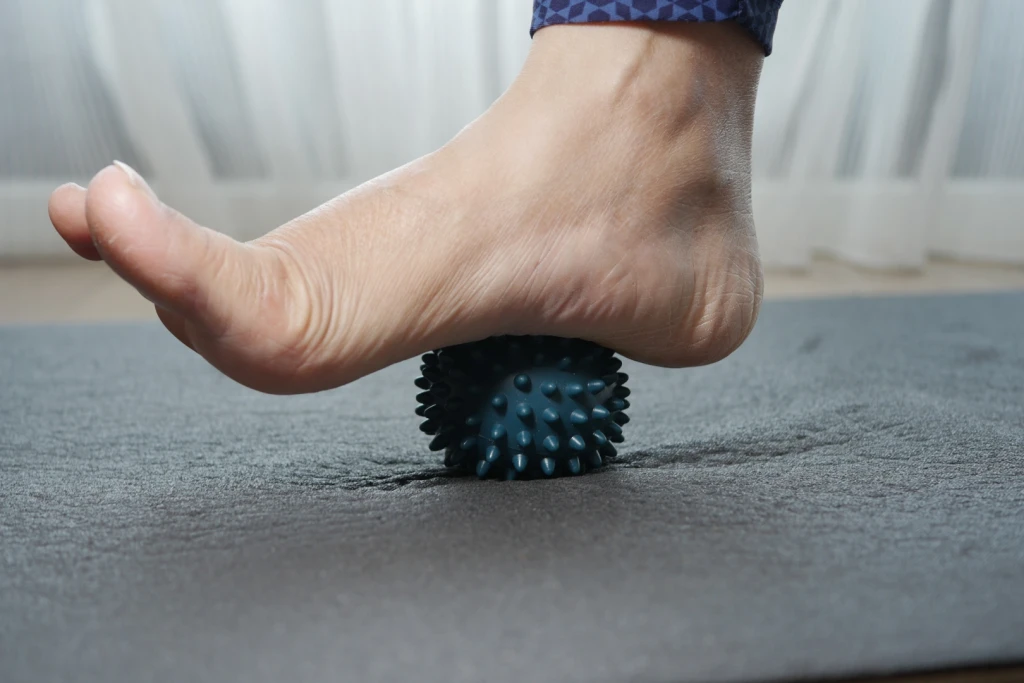
By the time someone asks me whether massage helps, they have usually already tried it. Most are pressing into the arch with a thumb, rolling the foot over a massage ball, or booking in with a masseuse. The people doing their own gentle version often get something out of it. A massage ball rolled slowly under the arch, along with some calf massage, can loosen tight tissue and give real short-term relief from the morning stiffness and that first-step pain.
Can massage help plantar fasciitis?
Yes, for relief. The plantar fascia does not work in isolation. It sits in a chain that runs up through the calf, and when the calf and the arch are tight, the fascia is under more tension. Easing that tension with a ball under the arch or some gentle calf work can reduce the pull on the heel and calm things down for a while. Research on hands-on work backs this up. A review of soft tissue therapy for long-standing plantar fasciitis found that adding it to standard care tends to improve pain and foot function more than standard care alone. So massage has a genuine place. The important word is relief, not cure.
When does massaging make plantar fasciitis worse?
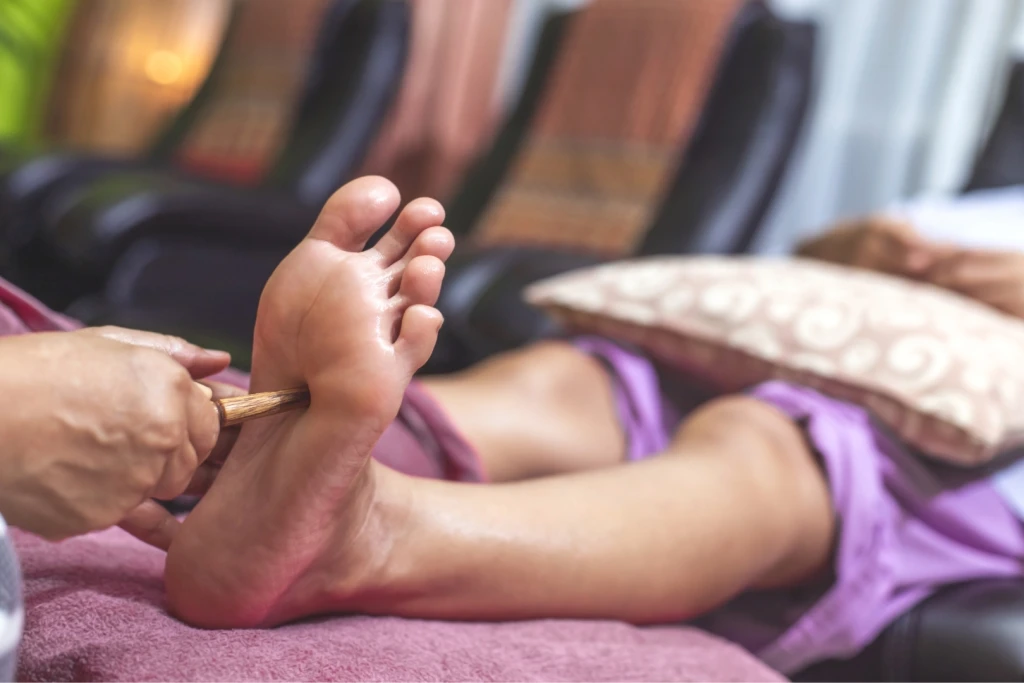
This is the part I wish more people heard before they went looking for a fix. The cases I see go wrong are almost always the heavy-handed ones. A masseuse or a foot reflexology session, where a lot of force gets driven into a painful heel, is the usual culprit. Some go further and use a wooden or metal tool to dig straight into the sorest spot, and they come away with swelling or bruising over the heel.
That is not the fascia releasing. Grinding into an already irritated, and sometimes partly torn, band of tissue can aggravate it and raise the risk of more damage. I have assessed feet where there was a genuine tear within the fascia, in people who had that kind of deep, forceful treatment done before they came to see me. Pain here is not a knot to be broken up. If a treatment on your heel is hard enough to bruise, it is too much.
Why does the pain keep coming back after I massage it?
When someone tells me massage helps for a bit but the pain always returns, that tells me two things. There is an underlying injury that is still there, and easing the muscle tension around it is genuinely giving some short-term relief. What it also tells me is that massage alone is not addressing the whole picture. So we look deeper. How does the foot load when you walk, what is your activity level, what shoes are you in all day, what does your gait look like, and how severe is the problem.
That last point matters more than people expect. A strained, irritated fascia and a partly torn fascia both get called plantar fasciitis, yet they sit at very different levels of severity and they do not respond to the same plan. Massage might be a reasonable part of managing the first. It can be the wrong move for the second. Working out which one you have is the whole point of an assessment, and it is a big reason stretching or rubbing alone often does not fix the problem.
If you have diabetes, be very careful with foot massage
This is one caution I do not soften. If you have diabetes, be extremely careful with any home remedy that involves heat or pressure on the feet. I once looked after a patient who had lived with diabetes for more than ten years and, without knowing it, had developed diabetic neuropathy that had reduced the sensation in his feet. He used an infrared heat massager and rested his foot on it for over an hour. Because he could not feel how hot it was getting, he ended up with burns that then needed a long course of wound care. Thankfully, he dodged an amputation.
Reduced sensation is common in long-standing diabetes, and it means you can injure yourself without the pain that would normally make you stop. If diabetes is part of your picture, skip the heat, go easy on the pressure, and get the foot assessed rather than experimenting at home.
What self-care actually helps?
For most people with everyday plantar fasciitis, a few simple things are both safe and useful:
- Calf stretches, done regularly rather than forcefully.
- A massage ball rolled gently under the arch, not driven into the heel.
- Foot strengthening such as toe towel curls.
Icing is the one I get asked about that I usually do not recommend, with two exceptions. If the pain comes with swelling, or it is new and started right after a physical activity, which points to a more acute injury, then ice has a role. Otherwise cold does little for the long-running version of this problem. And if the simple measures are not shifting things after a few weeks, take that as your signal that the fascia needs more than self-care.
What happens when massage is not enough
When the basics have plateaued, an assessment works out why. We look at how you load the foot, your footwear, your training, and how irritated or damaged the fascia actually is, then match the plan to that. For a stubborn plantar fascia that has not responded to hands-on work and load changes, shockwave therapy is one of the options we would talk through, alongside guided loading, footwear changes, and where useful, custom orthotic support. The aim is to take the strain off the fascia so it can settle, rather than chase the pain around with pressure.
If your heel pain has been dragging on, our podiatrists across Buona Vista, Orchard, and Paya Lebar can assess your plantar fasciitis properly and build the plan around your foot. Book a consultation with any of our podiatrists at any of our three clinics in Singapore.
Frequently Asked Questions About Plantar Fasciitis Massage
Can massage help plantar fasciitis?
Yes, for short-term relief. Gentle work on the calf and the arch can ease the tension that pulls on the heel, and soft tissue therapy added to standard care tends to improve pain and function. It is a useful part of managing the problem, but on its own it does not fix what is loading the fascia in the first place.
Is it safe to massage plantar fasciitis yourself?
Gentle self-massage with a ball rolled under the arch, along with calf work, is generally safe for most people. Keep it firm but comfortable. Avoid driving hard into the painful heel, and do not use wooden or metal tools to dig at it, since that can aggravate the fascia rather than release it.
Can massage make plantar fasciitis worse?
It can. The problems I see come from forceful massage or reflexology on the heel, sometimes with tools, that leaves the area swollen or bruised. That kind of force can worsen an already irritated fascia and, in some cases, contribute to a tear. If a session on your heel is painful enough to bruise, it was too aggressive.
Should I use a massage gun on plantar fasciitis?
Keep a percussion or massage gun off the heel bone and off any sharply painful spot. Light use on the calf muscles is reasonable for most people, but the heel itself is not the place for repeated percussion, especially during a flare.
References:
- Effectiveness of soft tissue manual therapy in chronic plantar fasciitis patients: a systematic review, Physical Therapy Reviews, 2025.