
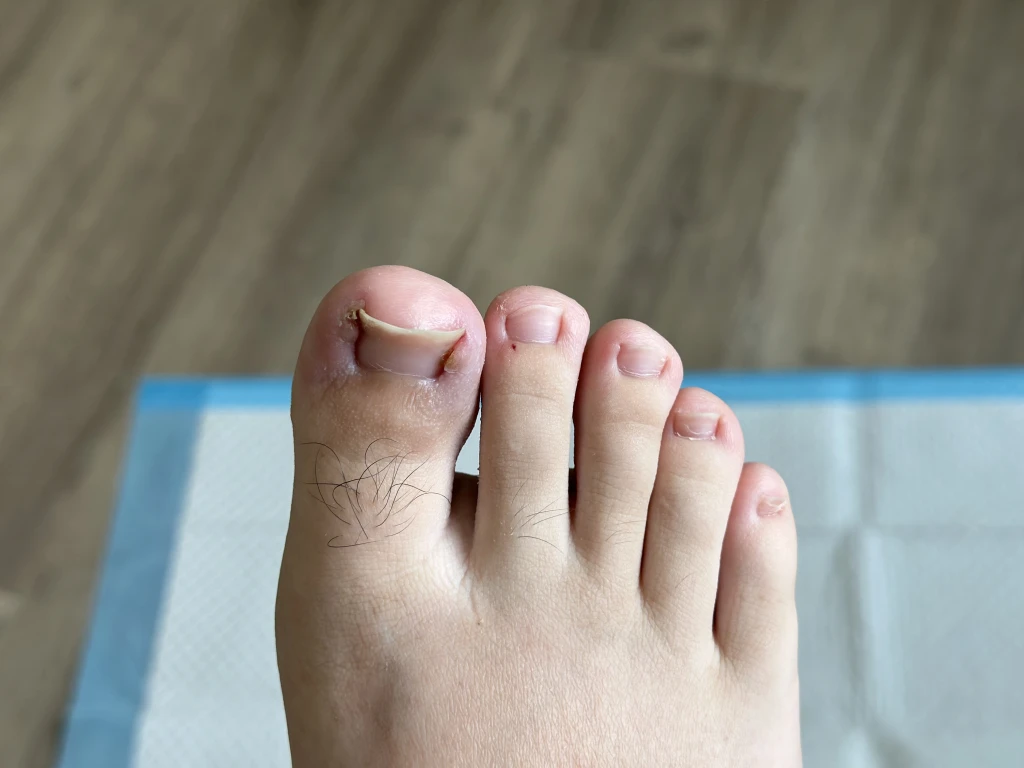
An ingrown toenail is one of the problems I most often see people try to fix themselves before they come in, and I understand why. The moment that corner starts to sting, the internet hands you a dozen remedies: dental floss tucked under the nail, cotton wool at the edge, vinegar soaks, taping the side down. Some of it gives a little short-term relief, some of it does nothing, and a fair amount of it is exactly what turns a mild ingrown toenail into an infected one I then have to sort out.
So here is how to deal with an ingrown toenail at home the safe way: what genuinely helps a mild one, what to leave well alone, and how to tell when it has gone past the point of home care.
When Home Care Is Appropriate
An ingrown toenail occurs when there is a portion of the nail stuck in the flesh. Home care is only appropriate for minor cases, meaning there is mild soreness and slight redness at the nail corner. There should be no discharge, no pus, no significant swelling, and no open skin.
If you, however, have any signs of an infected ingrown toenail, such as pus, heat, significant swelling, or spreading redness, please do not attempt home treatment. See a podiatrist.
Also, if you have diabetes, peripheral neuropathy, or poor circulation, home care for any nail issue is 100% not recommended. Once again, please see a podiatrist instead, even for what appears mild.
What Actually Helps
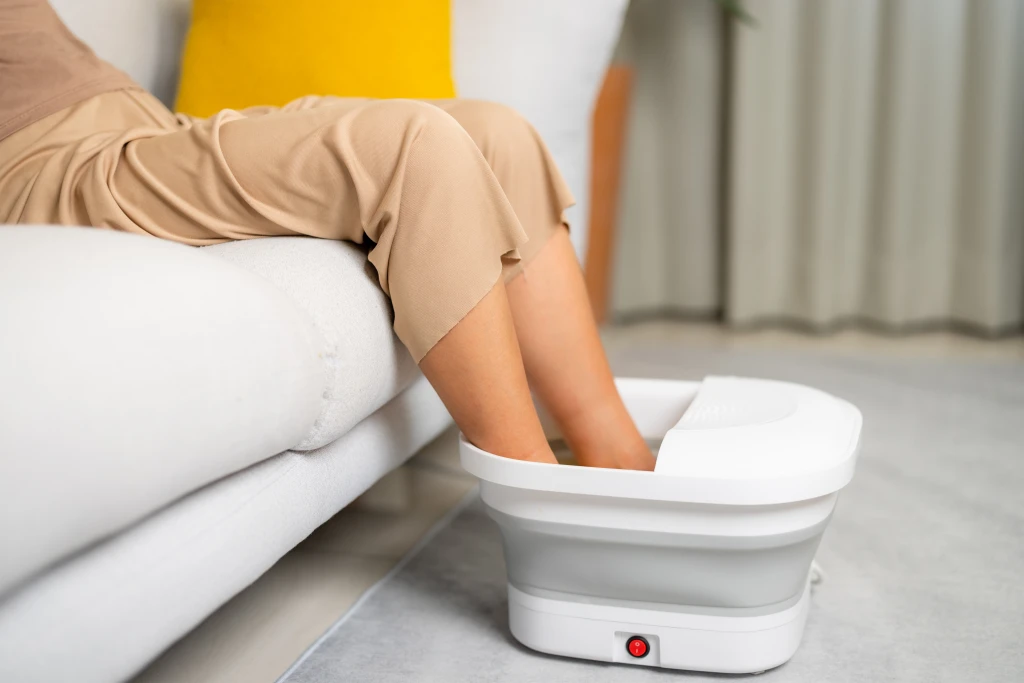
Warm water soaks
This is the one home remedy with a genuine clinical basis, at least to some extent.
Soaking the affected foot in warm (not hot) water for 10 to 15 minutes, two to three times a day, softens the surrounding skin, reduces immediate inflammation, and eases the pressure sensation.
We recommend using plain warm water. However, adding Epsom salts is fine if you prefer, but not essential.
Avoid very hot water, which can increase swelling and risk of burns. This is why patients with diabetes should never attempt home care.
After soaking, pat the toe dry gently and keep it clean. Moisture left on the skin between soaks creates a warm, damp environment that bacteria can thrive in.
Gently smoothing a sharp corner with a nail file
Often it is the sharp corner of the nail edge, not the whole nail, that is causing the discomfort. If that corner is already exposed and you can reach it easily, gently rounding it with a slim nail file can take the sharp point off and ease the pressure against the skin.
The important distinction is this. Filing smooths an edge you can already see and reach. It is not the same as cutting the corner short or digging down into the nail groove to chase the edge, which we explain further below. Do not try to cut the nail deeply, because most people simply leave a fresh sharp corner behind, and that makes the next flare-up worse. If the edge is buried in the skin, is bleeding, or the toe looks infected, leave it alone and see a podiatrist.
Appropriate footwear during recovery
Switching to open-toe footwear, such as sandals, slippers, or thongs, while the toe is sore removes the continuous lateral pressure from the toe box that keeps aggravating the problem.
This alone can make a meaningful difference in how quickly the discomfort settles. But in Singapore’s school and workplace environments, this isn’t always immediately possible.
If you must wear enclosed shoes, choosing the roomiest pair you own, loosening laces at the toe end, and wearing the thinnest socks available will reduce pressure.
Footwear pressure
In Singapore, where many of us wear formal enclosed shoes for work, school shoes tend to be narrow at the front, and sports shoes are sometimes chosen by size alone without accounting for width.
The toe box width matters enormously. When toes are compressed sideways, the skin is pushed against the nail edge continuously. Add sweat from our humid climate, and you have the ideal environment to cause ingrown toenails to keep coming back.
Keeping the area clean and dry between soaks
After soaking, allow the area to dry completely before putting on socks or shoes.
If you are active during the day, covering the area with a clean plaster or band-aid can prevent germs from infecting the area. Replace this daily.
Nail cut review
Going forward, toenails should be cut straight across, not rounded at the corners, and left long enough that the edge extends slightly beyond the skin at the tip of the toe.
This is probably the single most important preventive step. But it appears that most people are still unsure on how to trim their toenail correctly.
What Doesn’t Work (Or Makes Things Worse)
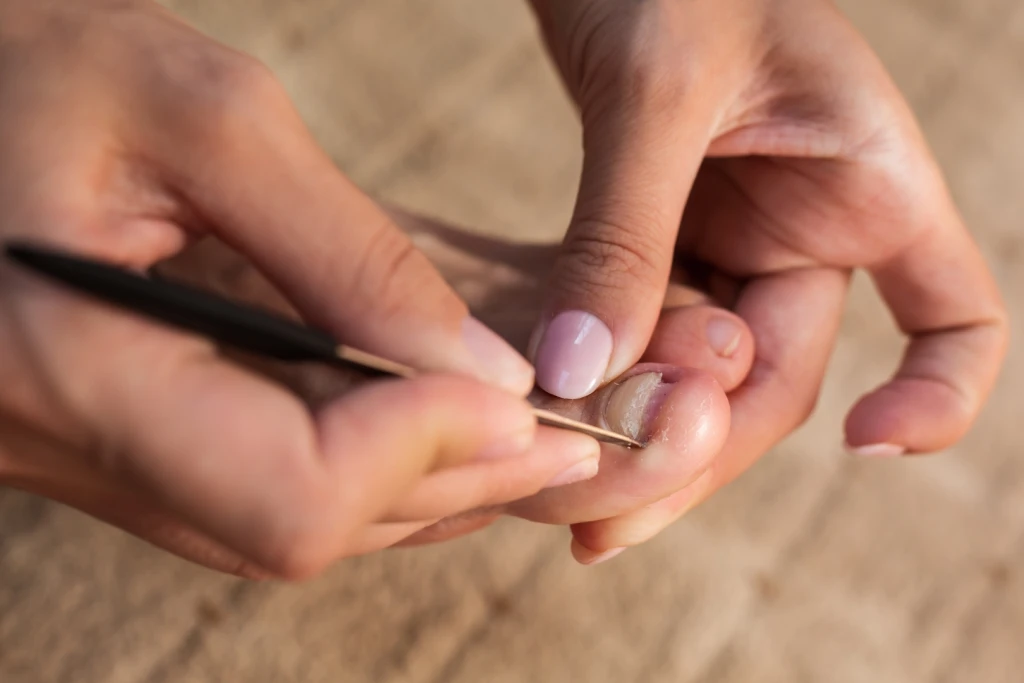
Tucking cotton wool or dental floss under the nail
You’ll find this advice widely circulated online. The theory is that lifting the nail edge away from the skin will change its growth direction.
In practice, for a mildly irritated nail, there is weak evidence that cotton wicking might provide temporary relief.
However, we do not recommend this for general home use because:
- It introduces material into an already inflamed nail groove
- If infection is present (even early), this creates a reservoir for bacteria
- It’s difficult to do correctly without causing further trauma
- Consistently reliable results require professional technique
In plain and simple terms, if an ingrown toenail is already applying pressure to the flesh, stuffing anything into the area will only increase the pressure further.
Avoid this unless your podiatrist gives a green light and a tutorial.
“Bathroom surgery”: cutting into the corner or digging under the nail
This is the most common and most harmful home intervention for ingrown toenails.
The instinct is certainly logical: if there’s a sharp edge pressing into the skin, remove it. But the problem is that cutting the corner very short or digging under it will:
- Leave a spike that, as the nail grows, burrows deeper into the tissue
- Introduce bacteria into broken or irritated skin
- Cause additional trauma to an already sensitive area
- Often make the subsequent professional treatment more complex because the nail edge is irregularly shaped
Many of the more severe ingrown toenail cases we see in our clinic have been preceded by repeated self-cutting. All of them have had some level of success in the past. However, mistakes will happen sooner or later, so please resist this urge and seek proper help.
Tea tree oil directly in the nail groove
Tea tree oil is thought to have antimicrobial properties and is popular as a natural remedy (even though the truth is that it takes a much greater concentration than commercial products to have that effect).
However, applying it directly to an ingrown nail fold (especially broken or raw skin) may cause contact dermatitis (a skin reaction) that looks similar to infection and makes clinical assessment harder.
If you want to use an antiseptic, a diluted povidone-iodine solution applied around (not into) the nail groove is better, but still not a substitute for professional care once infection is suspected.
Once again, the root cause is a nail stuck in the flesh. Applying topicals doesn’t remove that nail spike.
Betadine/antiseptic alone when infection is present
Antiseptic products only clean the skin or wound surface. They do not penetrate the nail fold where the bulk of bacterial growth is actually occurring in an infected ingrown nail.
They have a limited supportive role in the very early stage of irritation, and they provide a false sense of security when infection has set in.
Even taking oral antibiotics is giving false sense of security. That temporary relief from taking antibiotics will end once you complete the course. If the nail spike remains in the flesh, infection can recur.
Pulling the skin away from the nail
Some viral TikTok and Instagram reels suggest stretching the skin away from the nail edge to give the nail room to grow.
Whilst the editing skills make this method look powerful, it is actually causing tears in already-inflamed skin. 100% not recommended.
Very hot water soaks
As we said above, hot water (rather than warm), although it can increase blood flow to the area, can also increase swelling.
Warm is the operative word. You do not want to burn yourself when you are already in pain from the ingrown toenail. It’s like adding salt to a burnt wound.
Can You Get Rid of an Ingrown Toenail Overnight?
This is one of the most common things people search for, and the honest answer is no. So long as a portion of nail is still sitting in the flesh, nothing you apply or wrap around the toe overnight will make it go away. The problem is mechanical, and it is not something a cream can dissolve by morning.
We have seen no shortage of overnight cures: gadgets that claim to correct the nail while you sleep, ointments that promise to clear the irritation by morning, and home concoctions such as turmeric and garlic wrapped under cling film. They are too good to be true. The science does not change. If a nail is stuck in the flesh, it needs to be taken out.
Here is the reassuring part. When a nail edge does need removing, it does not take a night, it takes a few minutes of the right steps in clinic. So rather than pushing hard on an overnight fix and risking a worse infection, use the safe measures above to ease the discomfort, and let the nail either grow clear on its own or have it removed properly.
The Honest Truth About Home Remedies
The most effective things you can do at home for a mild ingrown toenail are also the simplest: warm water soaks, clean dry skin between soaks, open footwear, and not making the nail worse by cutting it incorrectly.
These steps can ease symptoms and give the nail a chance to grow clear of the skin on its own.
But here’s the honest reality: “home care works best on mild irritation, and even then, it manages symptoms rather than fixing the nail shape or matrix.”
If your ingrown toenail has been recurring, if it’s moderate to severe, or if there’s any sign of infection, professional assessment gives you a faster, safer path to resolution.
When to Stop Home Care and See a Podiatrist
- The discomfort is not improving after 3 to 5 days of proper home care
- You notice any pus, increasing swelling, or the skin feels hot
- The skin is beginning to overgrow the nail edge
- This is the second or third time this has happened
At Straits Podiatry, we see ingrown toenails at every stage of severity. Coming in early, especially before infection sets in, means that conservative ingrown toenail removal is often all that’s needed, with no procedure required.
Accurate diagnosis first
A podiatrist will assess not just the nail itself, but the shape of the nail plate, the depth and width of the nail groove, the condition of the surrounding skin, and whether infection or fungal involvement is present. This shapes what treatment will actually work.
A procedure that addresses the nail matrix if needed
For truly recurring cases, a partial nail avulsion is typically the most recommended option.
This minor procedure, done under local anaesthetic, removes the problematic strip of nail permanently by treating the nail matrix. It’s quick, performed in clinic, and has a low recurrence rate when done correctly.
Nail bracing for suitable candidates
In some cases, particularly when the nail is involuted but not infected, nail bracing can gradually reshape the nail plate’s growth, reducing pressure on the nail groove without surgery.
However, nail bracing may not work if the nail is entirely involuted from the matrix.
Guidance on trimming and footwear
Part of any good ingrown toenail consultation is reviewing the factors contributing to the problem. Targeting the factors with proper guidance will help reduce the risk of ingrown toenail recurrence.
Our podiatrists in Singapore will provide advice on correct trimming technique, footwear assessment, and what to watch for before the next episode starts.
Frequently Asked Questions About Ingrown Toenail Home Remedies
How do I deal with an ingrown toenail at home?
For a mild one, the safe steps are simple. Soak the foot in warm water two to three times a day, keep the toe clean and dry between soaks, switch to open or roomy footwear to take the pressure off, and gently smooth a sharp corner with a nail file only if it is already exposed. Do not cut down the side of the nail or dig under it, and do not put anything into the nail groove. If there is pus, spreading redness, or the pain is not easing after a few days, or if you have diabetes or poor circulation, stop home care and see a podiatrist.
Do ingrown toenails go away on their own?
Mild ones can. This usually happens when the nail edge has only been impinging on the flesh rather than piercing it, and the edge manages to grow out past the skin. When it settles on its own, it tends to do so over about one to two weeks from when the discomfort started. The safe rule is this. If all you feel is discomfort when you press the corner, with only mild redness or swelling and no bleeding or discharge, it is reasonable to use the home measures above and give it one to two weeks. If there is any bleeding or discharge, do not wait it out, because that means the nail has already pierced the skin and needs proper attention.
How long does an ingrown toenail take to heal?
A mild one that is going to settle on its own usually eases over one to two weeks. One that has pierced the skin or become infected will not reliably resolve by waiting, and the timeline then depends on the treatment. Once the offending nail edge is removed properly, the sharp pain typically eases quickly.
Can I get rid of an ingrown toenail overnight?
No. As long as a piece of nail is lodged in the flesh, no soak, cream, or overnight wrap will make it disappear by morning. You can ease the discomfort overnight with a warm soak, open footwear, and keeping the toe clean and dry, but that manages the symptom rather than fixing the nail.
Can I use a nail file to relieve an ingrown toenail?
Gently smoothing a sharp corner that is already exposed with a slim nail file can take the sharp point off and ease the pressure against the skin. This is different from cutting the corner short or digging into the nail groove, which usually leaves a fresh spike behind and can introduce infection. If the edge is buried in the skin, bleeding, or the toe looks infected, leave it alone and see a podiatrist.
When Should You See a Podiatrist?
Don’t wait until the skin is swollen, hot, or discharging. Seeing a podiatrist early, especially when the first signs of soreness appear at the nail corner, means more conservative options are available, and recovery is faster.
If your ingrown toenail has come back two or more times, that’s a clear signal that trimming alone isn’t solving the underlying issue. A proper assessment at Straits Podiatry can identify exactly why it keeps recurring and map out a plan to stop the cycle.