
A negative fungal nail test can feel like a relief. Sometimes it genuinely is. But when the test comes back clear and the nail keeps thickening, yellowing, or crumbling anyway, that negative result deserves a second look rather than the final word.
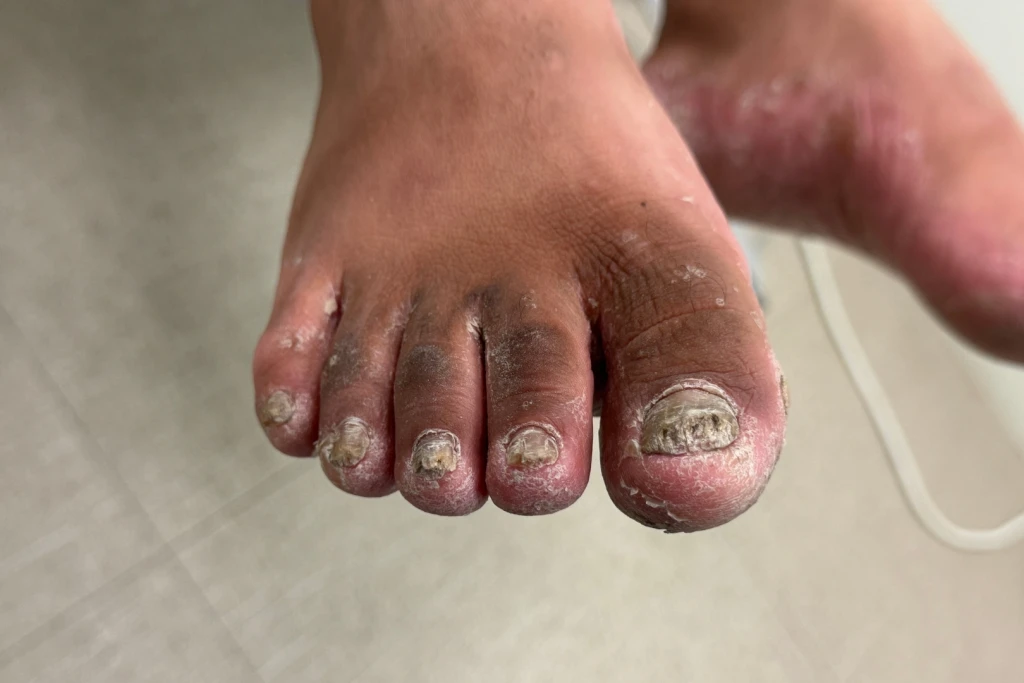
I had this exact situation in clinic this week. A patient came in with a nail that had been slowly thickening and discolouring for the better part of six to seven months. Months earlier she had done the sensible thing and had it looked at, and a fungal culture was sent off to the lab. It came back negative, so antifungal treatment was not started, which is a fair call to make on a negative result. The problem was that the nail kept getting worse, and that mismatch, a clear test sitting next to a nail that would not stop changing, is what brought her in for another opinion.
Here is the part most people are never told. The common fungal nail tests miss a real share of true infections, so a negative result does not rule fungus out, especially when the nail in front of you is behaving like a fungal nail. Most of the fungal nails I see are actually fairly straightforward to recognise, so rather than lean on a test that can mislead, here are the questions I work through with patients when the test and the nail disagree.
So what is the fungal nail test actually testing?
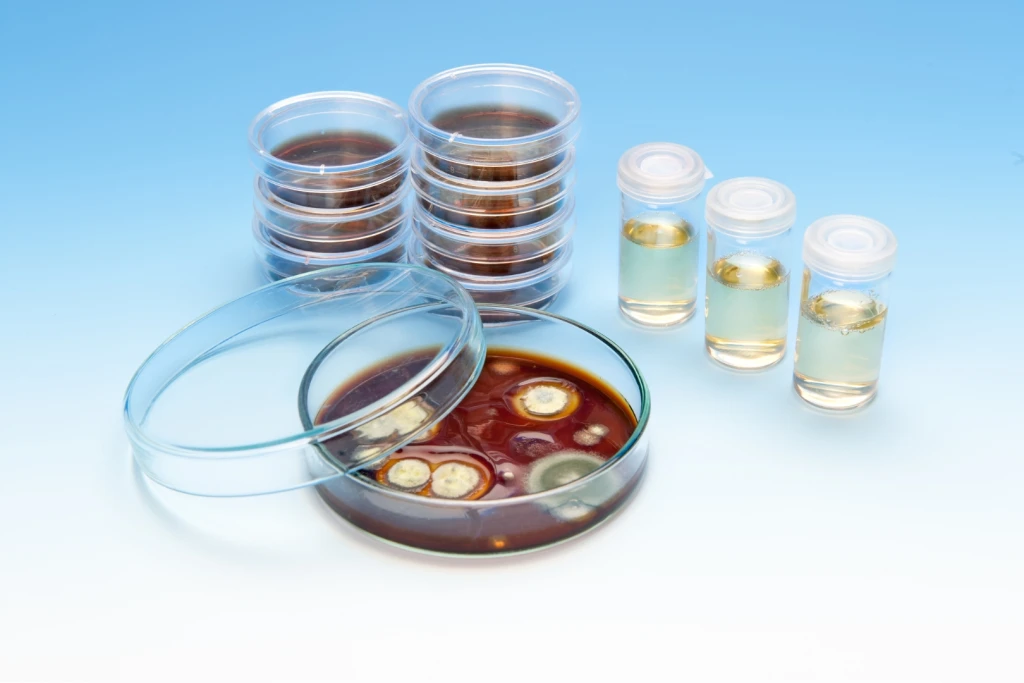
A small piece of the nail, either a clipping or a scraping, is taken and sent to a lab, and two things usually happen to it. The quicker one is direct microscopy, where the sample is examined under a microscope for fungal threads, often on the same day. The slower one is a culture, where the lab tries to grow the fungus over two to three weeks to identify the exact organism. There is a third, more sensitive test, where the clipping is stained and read by a pathologist, but it costs more and tends to be reserved for when the first tests come back negative and the suspicion is still high. In everyday practice, the test most people actually get is that microscopy and culture pair.
Here is how the common options compare:
| Test | What it does | Typical wait | How often it misses a real infection |
| Direct microscopy (KOH) | Looks for fungal threads under a microscope | Often same day | Around 4 in 10 |
| Fungal culture | Grows the fungus to identify the exact organism | 2 to 3 weeks | Around 1 in 3, sometimes close to half |
| Nail clipping histology (PAS) | A clipping is stained and read by a pathologist | A few days | The most sensitive of the three, but it costs more and is usually kept for unclear cases |
Why does it come back negative when the nail looks obviously fungal?
A culture only turns positive if living fungus grows on the plate, and there are several reasons living fungus fails to appear even when it is there. The sample can pick up mostly dead fungal fragments that will not grow. The scraping can miss the exact pocket where the fungus is sitting. Any antifungal cream used in the weeks beforehand, even an over-the-counter one, can suppress the fungus enough to blank the result. Slow growers and faster contaminants add to the noise.
It shows in the numbers. Pooled research puts fungal culture’s sensitivity at around 56 percent, which means it misses close to one in three, and sometimes nearly half, of genuine infections. Even the quick microscopy misses roughly four in ten. So a single negative result on a nail that looks and behaves fungal is fairly weak evidence that nothing is there.
If it misses that much, is the test even worth doing?
Sometimes it genuinely is. I will send for a test, or point a patient towards one, when the decision ahead actually hinges on the answer. The clearest example is when several nails are involved and the likely next step is an oral antifungal, because those tablets run for months, are processed by the liver, and interact with other medicines, so it is worth confirming there really is a fungus before committing to that. The other is when something in the picture suggests it might not be fungal at all, such as a history of psoriasis, which can change a nail in ways that look almost identical to fungus. In those situations a test earns its place.
For a straightforward single fungal nail managed with lower-risk options, a slow and costly test that can still mislead often does not change what we would do anyway.
Then how do you decide it is fungal without a test?
This is where an assessment does the work the lab slip cannot. I am not looking at one feature, I am reading the whole picture. I ask how it started and how it has changed, because a fungal nail tends to have a slow, creeping story rather than a sudden one. I look at how thick and brittle the nail is, the colour, and importantly how much of the nail plate the discolouration has spread across, and whether there is that soft, powdery debris collecting underneath. I check the skin around and beneath the nail too, because fungus rarely keeps to itself and often travels alongside athlete’s foot. None of that shows up on a culture plate, and taken together it usually tells me far more than a single yes or no result.
What if it turns out not to be fungal at all?
This matters just as much, because a large share of thick, discoloured nails are not fungal in the first place. Footwear trauma, psoriasis, and other skin conditions can all produce a nail that looks the part. If that is what is going on, then months of antifungal cream will never work, not because the treatment is weak, but because there was never a fungus to act on. Getting the diagnosis right is what stops you spending time and money on the wrong problem, and it is one of the reasons a fungal toenail is worth assessing properly rather than self-treating on a guess.
What should you do if your nail keeps changing?
If your nail is thickening, discolouring, or spreading, and especially if a test came back negative but the nail has not settled, treat that combination as a reason to have it looked at rather than a reason to close the book. A podiatrist can read the clinical picture, work out whether it is genuinely fungal or one of the conditions that mimic it, and from there talk through the options. For a confirmed fungal nail those can include nail care and debridement, photodynamic antifungal therapy (PACT), or other approaches depending on how much of the nail is involved. Fungal nails are also known to be stubborn once they set in, so the earlier the right call is made, the more straightforward things tend to be.
If your nail is not behaving the way a healthy one should, book a consultation with any of our podiatrists at any of our three clinics in Singapore.
Frequently Asked Questions About Fungal Nail Testing
Can you have a fungal nail infection with a negative test?
Yes. The routine tests miss a real share of true infections, so a negative result does not rule fungus out, especially when the nail is thickening, discolouring, or spreading in a way that fits a fungal nail. A changing nail alongside a negative test is worth reassessing rather than dismissing.
How accurate is a fungal nail culture?
A culture is trustworthy when it comes back positive, but much less so when it is negative. Pooled research puts its sensitivity at around 56 percent, so it misses close to one in three, and sometimes nearly half, of genuine infections, and it takes two to three weeks to return a result.
Do I need a test before treating a fungal nail?
Not always. A test is most useful when several nails are affected and an oral antifungal is being considered, or when a condition such as psoriasis could be mimicking fungus. For a straightforward single fungal nail managed with lower-risk options, a slow test that can mislead often does not change the plan.
References:
- Meta-analysis of the utility of culture, biopsy, and direct KOH examination for the diagnosis of onychomycosis, BMC Infectious Diseases, 2017.