

Every so often a patient comes in convinced their whole body is “out of alignment”, usually after being told that a tilt in the hips, or a flatter foot, is the reason their knee or back hurts. Malalignment syndrome is the label that tends to get attached to this idea. It is worth understanding what the term actually means, because the honest version is more useful than the way it is often sold.
What malalignment syndrome actually is
Malalignment syndrome is not a single, precisely defined disease. It is a descriptive term for a pattern where parts of the body do not line up in the way that shares load most efficiently, so some tissues end up working a little harder than others. That is a genuinely useful thing to assess. It is not, though, a switch that is simply on or off, and it does not affect everyone the same way.
Does being “misaligned” actually cause pain?
Here is the part that usually surprises people. The evidence linking static alignment, how your body lines up when you are standing still, to pain is actually quite weak. When researchers have looked closely, the studies tend to be small and methodologically limited, and a clean cause-and-effect between posture and pain has been hard to pin down. So misalignment is best read as one contributing factor among several, not the single reason something hurts. Plenty of people whose alignment is far from textbook have no pain at all, and plenty of pain has nothing to do with alignment.
Where the feet come into it
The foot is the base you stand and move on, so how it is built can influence how the leg above it lines up and loads. A flat foot that rolls inward, or a leg length discrepancy, can change how force travels up through the ankle, knee, and hip. That influence is real, but its size varies a lot from person to person, and it only matters clinically when it is genuinely contributing to a symptom.
When it is worth acting on
The honest answer is when there are symptoms and a plausible mechanical reason for them. If you have ongoing pain, if you fatigue quickly on your feet, or if your body is clearly loading unevenly and something is complaining, then how you align and load is worth assessing properly. If you feel fine and function well, an imperfect posture on its own is not something to chase.
Signs that are worth having looked at include:
- Ongoing pain in the feet, ankles, knees, hips, or lower back
- Discomfort that builds with prolonged standing or walking
- Muscular tightness, or tender, ropey spots in the muscles
- Uneven wear on your shoes from one side to the other
How we assess and manage it
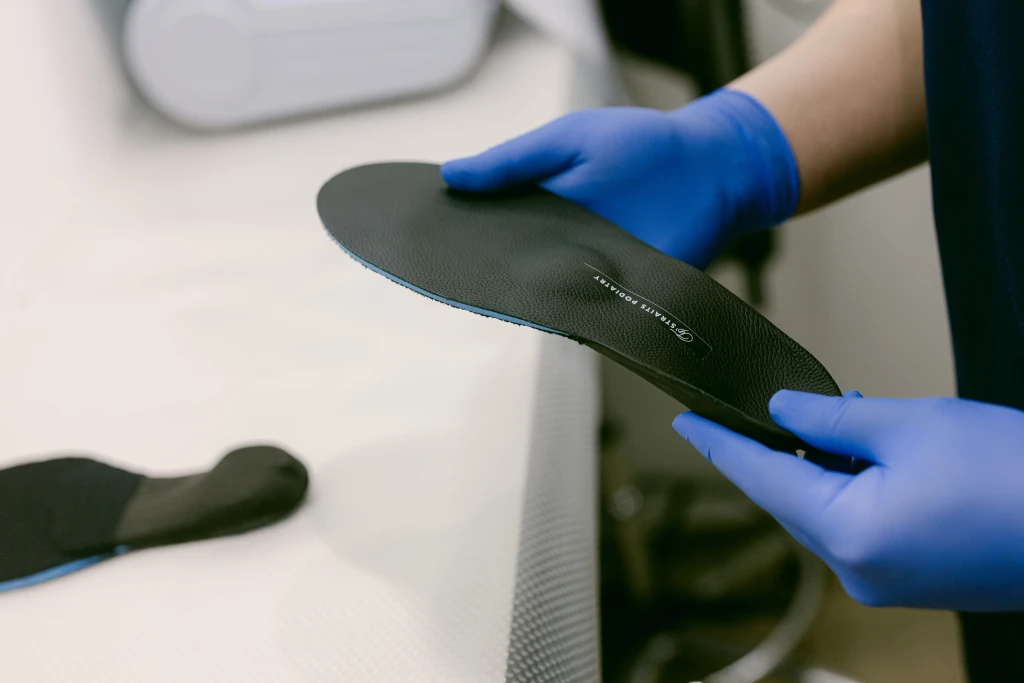
When someone comes in with this picture, the useful work is not to declare them “misaligned” and stop there. It is to work out what is actually loading the sore tissue, and whether alignment is part of it. Management then follows what we find. That might mean custom orthotics to change how the foot loads while you wear them, rather than to permanently reshape you, work with our physiotherapist on strength and mobility, or targeted soft-tissue work to release tight, overworked muscle. The plan follows the assessment, not the label.
The bottom line
If you have been told your body is “out of alignment” and you are not sure what to make of it, the sensible next step is a proper assessment rather than a verdict. At Straits Podiatry, our podiatrists assess how your lower limb lines up and loads, work out whether that is genuinely contributing to your symptoms, and manage it accordingly. Contact us or schedule an appointment, and we will give you a straight answer.
Reference: Static body postural misalignment in individuals with temporomandibular disorders: a systematic review, Brazilian Journal of Physical Therapy.