
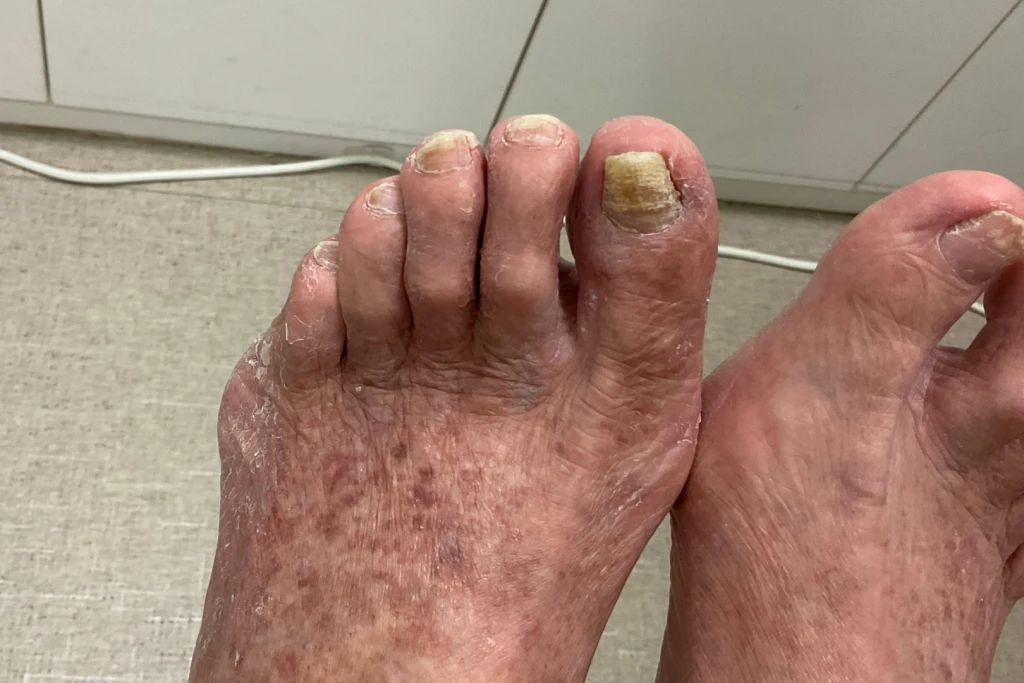
I get asked this a lot in clinic, usually with a slightly worried look: why is my toenail getting thicker? Most of my patients notice it late, when the nail starts catching on a sock or the shoe feels tight over just that one toe. By the time it comes up, the thickening has often been creeping along for months. And almost everyone walks in with the same assumption already made: it must be a fungus. Plenty have already tried an antifungal cream from the pharmacy for a few weeks, or various remedies a pedicurist suggested, and nothing has changed.
If that sounds like your situation, here is the part that tends to surprise people. A thick toenail is not always due to a fungus. Fungus is one cause, but only one of several. The others are more common than most patients expect. Working out which one you are dealing with is the whole game. The cause is what decides whether anything you do will actually help. That is really what a thickened toenail assessment is for.
I see this regularly, across a wide range of ages, and the conversation almost always runs in the same order. So here are the common questions my patients ask, and my usual explanation to them.
First, is it just a fungus?
A fungal nail does thicken, so this is a fair place to start. But it usually thickens in a particular way. The nail goes crumbly or flaky rather than solid, and the colour drifts towards yellow, brown, or white. There is often a build-up of soft debris underneath that lifts the nail. It tends to start at one edge or the tip and creep inwards. It often travels with some flaky, itchy skin between the toes. In our climate, feet are shut inside socks and covered shoes most of the day. That warm and damp environment suits the fungus well, so it is genuinely common here.
Here is the catch. If your nail is thick but still fairly smooth, fairly solid, and a fairly normal colour, fungus is much less likely. That cream was never going to do anything. When the picture is not clear, it is worth confirming with a nail sample before committing to months of antifungal care. If it does look fungal, that is a different pathway altogether.
If it is not a fungus, why is it thickening?
Two causes account for most of the thick nails I see that are not fungal.
The first is old trauma to the nail, and this is the one patients forget. A nail does not have to be dropped on once to thicken. Years of the toe pressing into the front of a shoe will do it just as well. That is why I see it in runners and in people who wear narrow dress shoes all day. I also see it on the toe that has been stubbed hard at some point. The damage is to the nail matrix (the nail root), the small growth zone tucked under the base of the nail. Once that is bruised or disrupted, the nail can grow back thicker, ridged, or slightly off-shape, and it usually keeps doing so. The giveaway is that it is often just one nail, on a toe that takes a pounding or that you can remember injuring.
The second is simply age. As we get older, nail growth slows, the nail plate lays down less evenly, and circulation to the feet drops off a little. Put together, the nail becomes thicker, more brittle, and often duller in colour. The giveaway here is the opposite of trauma. You see several nails getting thicker gradually over years, with none of the crumbly, discoloured signs of an infection. Many of my older patients have a few thick toenails for no reason other than time, and there is nothing to cure. They just become harder to cut safely at home.
Does it actually matter which one it is?
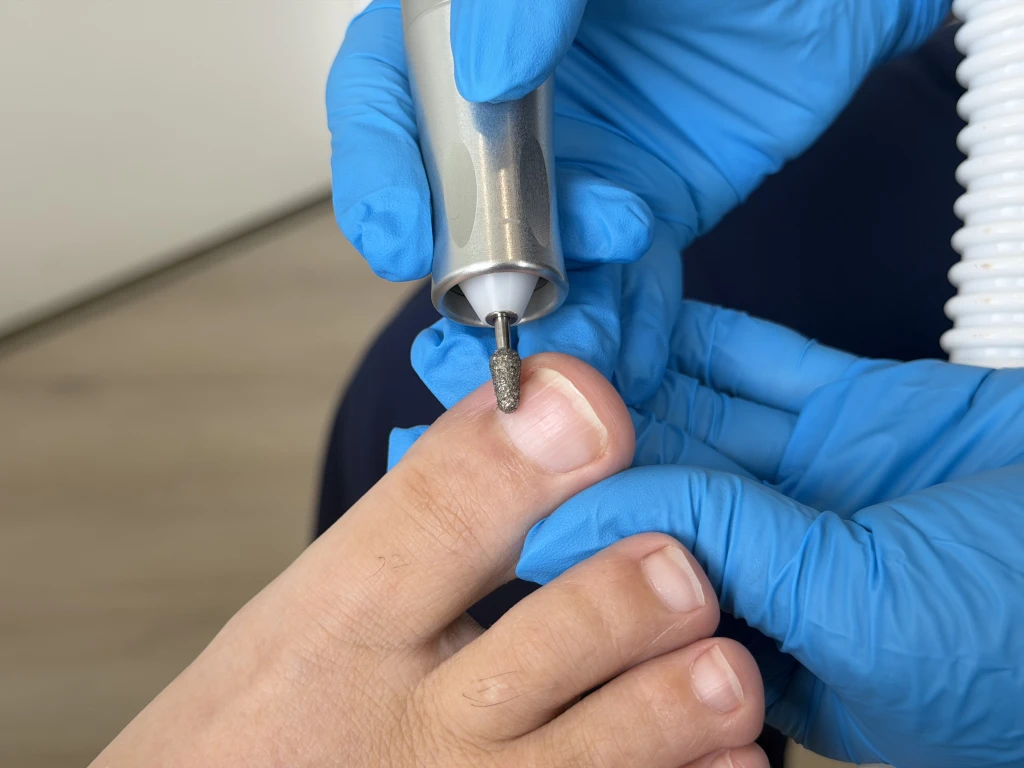
It matters most to your wallet, because each cause responds to a completely different thing. The cause decides whether you have been wasting money. A fungal nail needs an antifungal approach to have any chance. An age-thickened or trauma-thickened nail is not an infection at all. So an antifungal does nothing for it, no matter how long you use it. Honestly, the most common piece of wasted effort I see is a patient six months into an antifungal cream on a nail that was never fungal. For those nails, the useful work is not killing an infection. It is reducing the nail so it stops hurting, and taking the pressure off the toe that caused it.
Can I just file it down myself?
Yes you can, and you should, but carefully. Lightly filing the top surface to take some height off a thick nail is reasonable. What I would steer you away from is digging down the sides or cutting deep into a hard, thick nail with clippers at home. That is how people tear the skin and start an infection. And if you have diabetes, reduced circulation, or numbness in the feet, please get professional help. Do not struggle to reach a toe you can barely see. The risk of an unnoticed cut is the whole reason that group should have nails reduced professionally. In clinic we can reduce and thin the nail safely with the right tools. We get it comfortable in the shoe again, and show you how to keep on top of it between visits.
Okay, what would you do if you were me?
I would start by settling the cause rather than guessing, because everything else follows from that. A proper look at the nail sorts out whether the pattern fits a fungus, an old injury, or simply age. It also checks the footwear and circulation, and confirms with a nail sample in the cases where it genuinely is not clear. From there the plan is honest and specific. If it is fungal, you go down the antifungal route knowing it is worth the effort. If it is mechanical or age-related, the plan is regular professional nail reduction to keep it comfortable, plus a look at footwear so the same pressure is not feeding the problem.
One honest caveat. A nail whose growth zone has been damaged may always grow back on the thick side, so the goal is keeping it comfortable and tidy rather than promising a brand-new nail. That is a perfectly good outcome, and for most people it is all they actually need.
If a thickening toenail is bothering you, getting hard to cut, or you are not sure what is driving it, book a consultation with any of our podiatrists in Singapore at Straits Podiatry, at any of our three locations. The sooner we know the cause, the sooner you stop spending money on the wrong fix.